Marib… When Food Aid Becomes an Exhausting Search Journey
By Abdullah Al‑Attar

Yemen Monitor / Reports Unit:
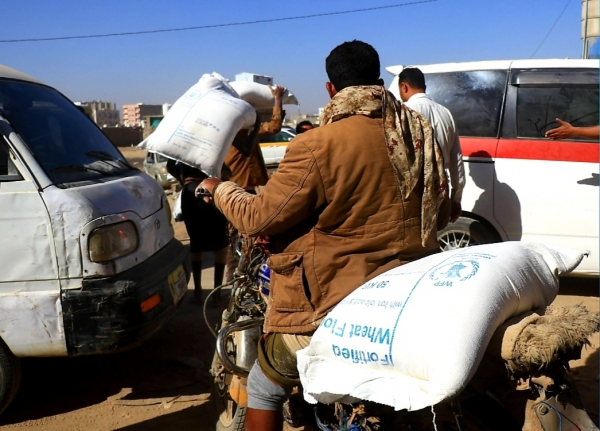
Many families in Marib Governorate in eastern Yemen are suffering significant difficulties in benefiting from food support programs implemented by international organizations, foremost among them the World Food Programme (WFP).
Despite the importance of these programs in providing basic needs for poor families, the procedures for accessing them involve numerous complications and practices that have burdened beneficiaries and exposed them to ongoing daily hardship.
Struggles in Correcting Data
A large number of beneficiaries complain about the lengthy and complex procedures for correcting their data, as their names are often entered incorrectly or omitted during registration. This forces them into an exhausting search across different centers to confirm their identities and ensure their eligibility for assistance.
Some families report that a person may spend two to three consecutive days moving between multiple centers, carrying all required documents—IDs and certificates—in an attempt to update their data and access aid, without achieving any clear result.
The Hardship of Searching for Names on Lists
The suffering is not limited to paperwork procedures; it also extends to repeatedly searching for correct names on beneficiary lists, amid a lack of accurate information or clear guidance.
One beneficiary from Marib City District says:
“I spent two full days moving between three centers searching for my name on the lists, and each center referred me to another… It’s extremely frustrating and physically and psychologically exhausting.”
Another beneficiary adds:
“Every time I think the problem is solved, I discover a new error in my name or my family’s details, or missing documents for the children, and the search starts all over again. These heavy procedures sometimes make me think about giving up entirely.”
Testimonies from Beneficiaries
Maryam — mother of four children:
“Sometimes I can’t find anyone to help me, and I carry my papers for days. I leave my children alone while I’m lost between different centers.”
Ali — head of household:
“All that’s required from us is updating data, but it feels like searching for a needle in a haystack. We need simpler and faster procedures.”
Khaled — young beneficiary:
“Moving between centers is extremely tiring, information is often inaccurate, and time is wasted without results. This burdens every needy family.”
Amal — displaced woman:
“The confusion of names and loss of data makes us feel hopeless, as if we don’t matter, even though we desperately need support. We need transparency and speed in procedures.”
Calls to Simplify Procedures and Improve Data
For his part, Dr. Ali Al‑Himyari, a specialist in humanitarian affairs, stresses that simplifying procedures for accessing food support programs has become urgent to ensure aid reaches those who deserve it without exhausting them or creating additional burdens.
Al- Himyari emphasizes the importance of improving the database and reviewing it regularly to avoid errors that turn the aid process into a daily struggle.
Marib remains a witness to the daily challenges citizens face in accessing their most basic right to food assistance, amid complicated procedures and delays in updating data.
Undoubtedly, addressing these problems and improving workflow—including enhancing transparency and flexibility—would help ease suffering, restore trust between beneficiaries and humanitarian organizations, and achieve the fundamental goal of these programs: supporting needy families and helping them cope with harsh living conditions.