Yemen Monitor / Sana’a / Exclusive:
On Monday, the Houthi group escalated the tone of its military threats toward the Kingdom of Saudi Arabia, hinting at “major surprises” and a return to targeting the capital, Riyadh. This is a dangerous sign reflecting the deadlock reached in indirect negotiations in Muscat and signals the potential collapse of the “no-peace, no-war” situation that has lasted for two years.
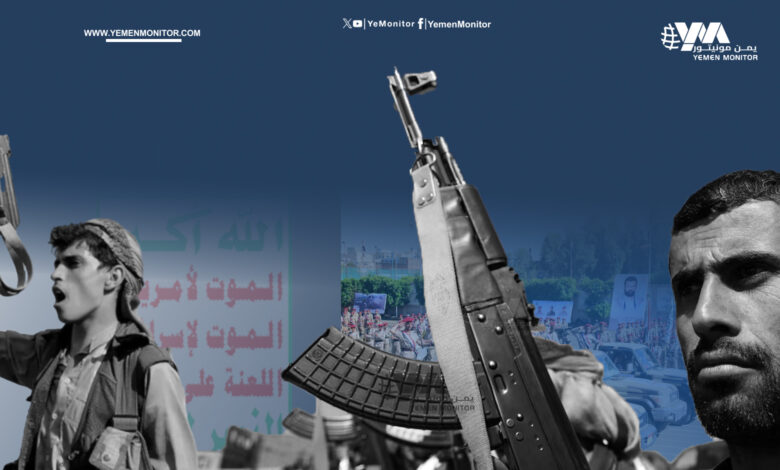
Prominent leaders in the Houthi Political Bureau launched a series of direct threats against Saudi Arabia, vowing what they described as “lowering the flags” and making Riyadh a close target, coinciding with stalled implementation of the UN peace roadmap for Yemen.
Ali Al-Qahoum, a member of the group’s Political Bureau, vowed a “major surprise” to Saudi Arabia, indicating that “the leader’s promise will be fulfilled.” Al-Qahoum used sharply escalating language, saying: “Just as your flags were lowered before, they will be lowered this time and for a long time,” adding that “Yemenis’ flesh is bitter and their blood is precious.”
Al-Qahoum did not specify in his “X” platform post what the Houthi leader’s promise was, but it appears he is referring to the Houthi leader’s previous threat: “Bank for bank, port for port, and airport for airport.”
Al-Qahoum linked Saudi Arabia to the United States and Israel, asserting that the alliance with “Americans and Zionists” would not protect the Kingdom. He described Riyadh’s current actions as “a continuation of the series of crimes, conspiracies, and selling out the nation’s causes.” Al-Qahoum affirmed the failure of bets placed on “eroding the internal front,” stressing that the Yemeni people will move “with full force to break the arrogance.”
For his part, Hizam Al-Assad, another member of the group’s Political Bureau, directly threatened to target the Saudi capital, tweeting a concise phrase with military implications: “Riyadh… closer.”
Al-Assad pointed to what he described as “growing popular resentment” turning into a “deep-rooted tendency for revenge.” He revealed figures related to the group’s military mobilization, stating that the number of participants in “General Mobilization courses” has exceeded one million trainees. These individuals trained in military courses last year amid the group’s propaganda that they would fight to liberate Palestine from Israel.
The Houthi leader claimed that the Saudi regime “has only been known for hostility toward Yemen since it was planted by British colonialism,” asserting that “this regime’s score will remain unsettled.”
The statements from the Houthi leaders focused on demonizing the Saudi role and linking it entirely to American and Israeli agendas. Hizam Al-Assad said that the Houthis no longer view the Saudi regime as anything but “a direct enemy and a natural extension of the Zionist and American foes.”
This sharp verbal escalation comes at a time when the Saudi-Houthi peace negotiations have witnessed a noticeable standstill since resuming last October. Meanwhile, UN Envoy to Yemen Hans Grundberg met with Iranian Foreign Minister Abbas Araghchi in the Omani capital, Muscat, on Monday, calling on Tehran to continue supporting peace efforts.
The Houthis want the Kingdom to implement the entire roadmap without condition or restriction. Observers believe that the Houthis are attempting to practice “brinkmanship” to pressure Riyadh into accelerating the signing of the agreement, regardless of Yemeni and regional considerations or the issue of placing the Houthis on terror lists.