Yemen Monitor / Reports Unit / Exclusive:
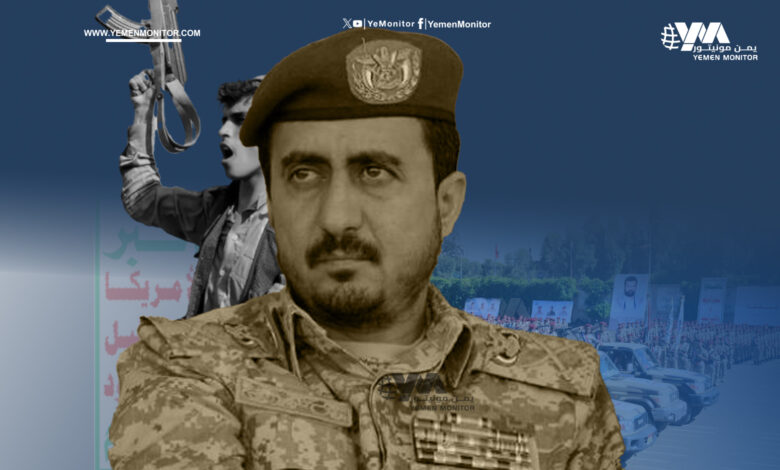
The Houthi group, by announcing the appointment of Yusuf al-Madani as the new head of the General Staff, has confirmed the consolidation of military authority centrality in the hands of the family circle close to the group’s leader, Abdul-Malik al-Houthi. This appointment, announced following the death of the former chief of staff, Muhammad Abdul Karim al-Ghumari, on October 16, places al-Madani in the highest formal military position under the Supreme Political Council.
Al-Madani, 48 years old, embodies the integration of military power with familial-ideological legitimacy within the group. He is not just a field commander, but represents the cornerstone linking the leadership of strategic military campaigns with the management of a complex external support network with Iran and Hezbollah.
Family Kinship: Immunity and Legitimacy
Al-Madani, who belongs to the elite “Sayyid” class in Zaydi thought and the ideological doctrine of the Houthi movement, derives his political legitimacy and influence from irreplaceable kinship ties with the group’s leadership. These ties guarantee his absolute loyalty and make his authority immune to internal factional competition within the movement.
He is the brother-in-law of the group’s current leader, Abdul-Malik al-Houthi, which guarantees him direct and unconditional access to centers of command and decision-making. Al-Madani is also married to one of the daughters of Hussein Badr al-Din al-Houthi, the founder of the movement and its first “martyr,” which reinforces his legitimacy and connects him to the roots and history of the movement.
The relationship between the two families illustrates the depth of entrenchment. His late brother, Taha al-Madani, who was killed in 2017, was a prominent security official and married to a sister of Abdul-Malik al-Houthi, indicating a clear strategy to institutionalize the al-Madani family within the core family structure of the group.
The convergence of al-Madani’s status as a “Sayyid” and his direct marital links to the al-Houthi family represents the primary qualification for his sensitive, high-level roles (military command and external liaison).
Functional Role and Strategic Importance
Yousef Al-Madani’s military history shows that he is not just a family symbol, but a leader with extensive field experience in strategic operations and doctrinal leadership. Since the early days of the Houthi movement, Yousef Al-Madani and his brothers were part of the tribal efforts to fight against the Houthis, but the kinship relations with the Al-Houthi family were of greater, irreplaceable importance to Al-Madani.
Al-Madani serves as a crucial command and control (C2) node within the Houthi “Jihad Council.” His role is evident in ensuring the efficient implementation of strategy in the field, especially in major offensive campaigns. Al-Madani was described – before 2014 – as the group’s second-in-command, and his primary function was to implement the group’s strategies, provide the movement’s ideological leadership, and build local forces.
He was responsible, alongside “Abu Ali Al-Hakem” and “Abdulkhaliq Al-Houthi,” for leading military operations in Amran and the entry into Sana’a, and was directly responsible for military and tribal relations and building ideological and military forces after 2015.
After 2017, he assumed the leadership of the Fifth Military Region, which includes the governorates of Hudaidah, Hajjah, Al Mahwit, and Raymah. The importance of this position lies in his oversight of the strategic western coast on the Red Sea and confronting the pressure imposed by the Coalition in the “Hudaidah liberation” operation launched by the Yemeni Government and the Arab Coalition, which ended with the “Stockholm Agreement.”
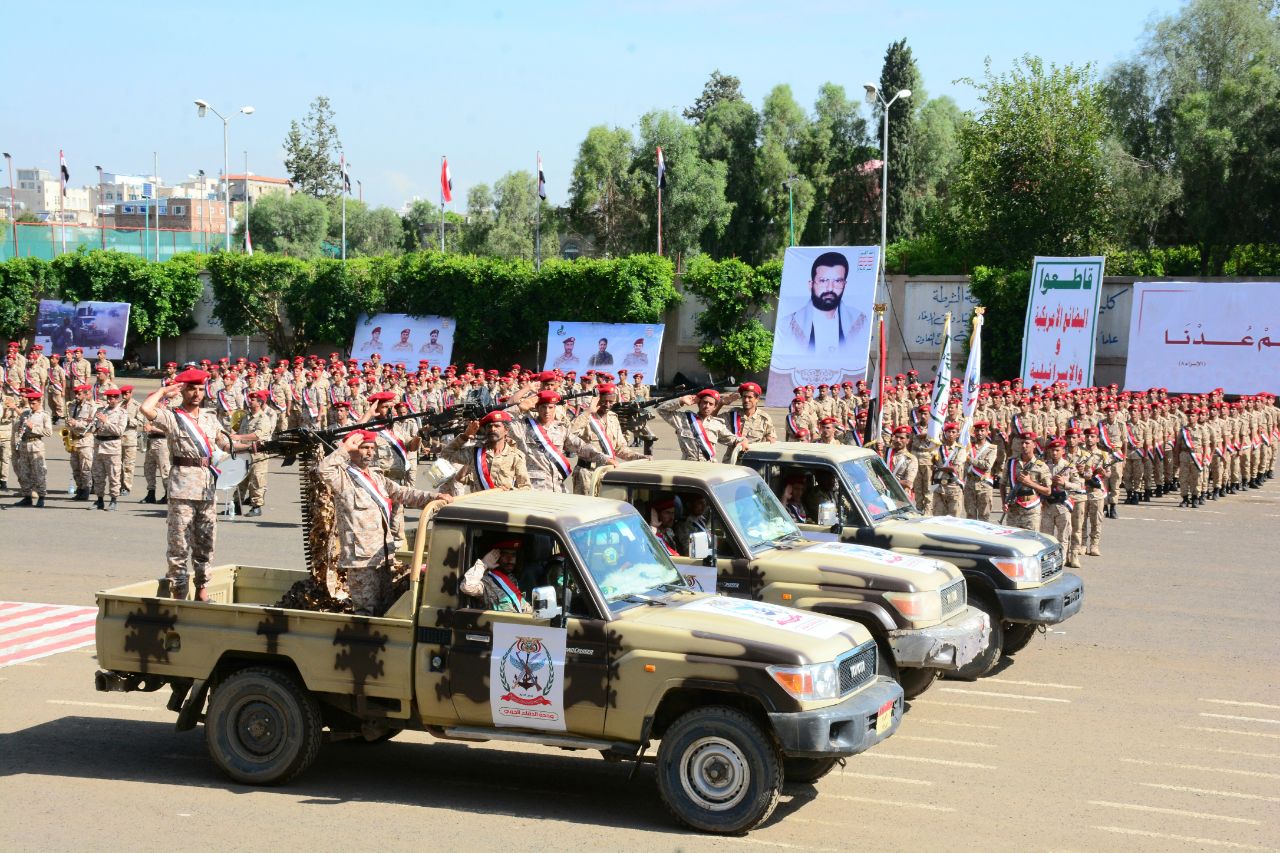
His role in Hudaidah was not aimed at full control as much as at managing a strategic pressure point. His leadership led to continuous violations of the ceasefire provisions in the Hudaidah agreement. Al-Madani used military operations as a form of non-kinetic pressure to ensure that the humanitarian crisis remained a constant pressure point on the Arab Coalition. On this basis, the Security Council placed him on the sanctions list in 2021 as an individual engaged in acts that threaten peace and stability in Yemen. The justification was specifically based on his leadership of military campaigns that caused continuous violations of the Hudaidah ceasefire agreement, exacerbating the humanitarian crisis.
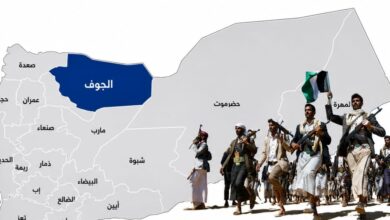
As of 2021, Al-Madani was tasked with leading a high-risk offensive campaign to control energy resources in Marib governorate; which was ultimately broken by the National Army forces, and the Houthis suffered heavy losses. However, it also achieved gains by controlling and consolidating presence in the districts of Rahabah, Al Abdiyah, Harib, Al Jawbah, and Jabal Murad.
Throughout his appearances in military uniform, Yousef Al-Madani adhered to wearing the official uniform and respecting rank traditions – for example, not wearing the red staff insignia (epaulets) if they had not attended the Staff College. Al-Madani did not attend any military college or receive formal education, limited only to Zaydi religious sciences in Sa’ada governorate early in his upbringing.
The Crucial Link with the Iran-Hezbollah Axis
Al-Madani is considered the “main liaison” between the Houthi group and its external patrons, specifically the Iranian Revolutionary Guard Corps (IRGC) and Hezbollah. This role is considered vital for the Houthis’ resilience and ability to continue fighting.
As mentioned earlier, a large part of his responsibility involves building local forces; therefore, his direct responsibilities within external communications are linked to his internal tasks: he oversees the training process of fighters, whether in internal camps in Yemen, or by sending them to IRGC camps in Iran and Syria (before the fall of Bashar al-Assad’s control over much of Syria).
He also supervised the process of bringing military experts and trainers from the IRGC and Hezbollah to Yemen. This is essential for developing Houthi capabilities in missiles, drones, and naval operations. He also holds influence over the leadership of logistical operations and support provided to the group, indicating his direct involvement in complex weapons smuggling operations and the distribution of materiel.
The level of sensitivity and security required to manage this external military file necessitates placing a core family member in this role. Al-Madani’s family links are the enabling factor for his appointment as a crucial liaison, where Tehran’s trust in him is considered more important than any single military victory. The IRGC needs a counterpart in Sanaa whom they trust reports directly to the highest authority (Abdul-Malik al-Houthi), and al-Madani, as the leader’s brother-in-law, fulfills this requirement.
Immunized Authority in Factional Competition
The deep familial interconnection is a structural factor that guarantees al-Madani’s absolute loyalty and makes his authority immune to internal factional competition within the movement. Analysis of the power structure indicates that the convergence of his status within his direct marital links to the al-Houthi family serves as the primary qualification for his sensitive, high-level roles (military command and external liaison).
His political survival and power are guaranteed by this family connection, which transcends mere military performance. In a group centered around the founding family, roles requiring high trust, such as coordination with Iran or leading existential campaigns (like Marib), must be entrusted to the closest, most trusted relatives.
The successive appointments of Yusuf al-Madani to high leadership roles, and the close, trusted coordination he conducts with Tehran, confirm that the group is moving towards deepening military centralization and ensuring that control over its most critical affairs – namely war and financing – remains confined within the narrow family circle. This reflects a structural resistance within the group to any future arrangements that might require the dismantling – or sharing – of military power in any potential peace agreement.