Yemen Monitor/ (Special Monitoring):
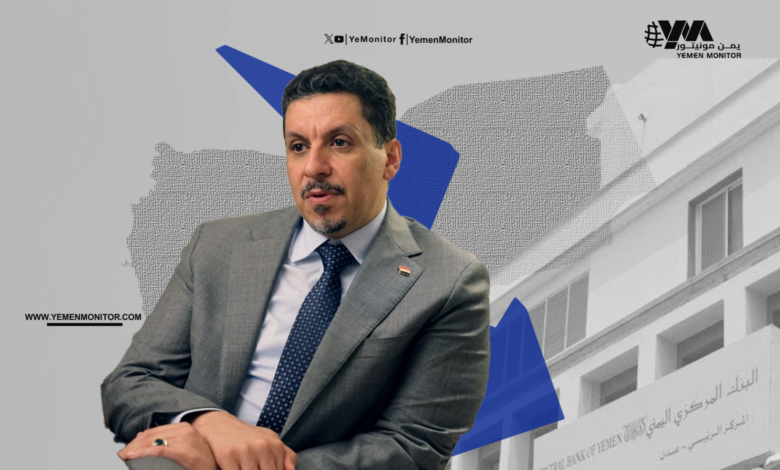
The internationally recognized Yemeni Prime Minister, Ahmed Awad bin Mubarak, announced his resignation, justifying it with “many difficulties” he faced, most notably his inability to exercise his constitutional powers in making reform decisions and carrying out government reshuffles.
The resignation came after media leaks about the Presidential Leadership Council’s intention to dismiss him and appoint Salem bin Brik as his successor, with bin Mubarak preempting the decision by announcing his resignation.
A government source told “Yemen Monitor” at dawn on Saturday that Salem bin Brik is scheduled to be announced today as the Prime Minister of the internationally recognized Yemeni government, removing Ahmed Awad bin Mubarak from his position.
Bin Mubarak’s resignation sparked mixed reactions among analysts and activists, with some seeing it as a direct accusation against President Rashad Al-Alimi and the Presidential Council, while others considered it an attempt at a “dignified exit” in the face of his imminent dismissal. Others highlighted the hidden conflict between Al-Islah party and the corruption network within the legitimate institutions, led by the Presidential Leadership Council.
Key Initial Reactions to the Resignation Decision:
Activist Abdulrahman Anis criticized the timing of the resignation, noting that it came after the dismissal decision was signed, raising a constitutional issue about the status of the current government.
Anis proposed two scenarios: “Either consider the government fully resigned and form a new government, or constitutionally revoke the resignation due to its old date.”
Activist Abdullah Owbal praised bin Mubarak’s performance in confronting corruption, especially canceling suspicious energy contracts and reducing transportation costs, but acknowledged that “corruption was stronger,” considering that bin Mubarak left office with a clear conscience after a courageous attempt.
Political activist Ali Al-Bukhaiti saw the resignation as “retroactively dated” to be a dignified exit, but he expected the Presidential Council to treat it as a dismissal, keeping the current ministers and changing only the Prime Minister.
Journalist Yahya Al-Ahmad quoted a responsible source as saying that bin Mubarak “came wanting to make himself a state,” referring to his refusal to engage in the network of private interests that dominated previous governments, which provoked a broad alliance of beneficiaries against him.
Salah Al-Saqladi confirmed that the most important aspect of bin Mubarak’s resignation is his explicit accusation against President Al-Alimi and the Presidential Council of not enabling him to carry out his duties, revealing deep disagreements within the legitimate structures.
Media figure Bashir Al-Harthi described the resignation as a reflection of a deeper battle between Al-Islah and corruption, noting that bin Mubarak faced pressure after trying to stop the bleeding of illegal support for officials. Despite criticizing bin Mubarak’s mistakes in managing priorities and clashing with political parties, he confirmed that his involvement in corruption has not been proven, unlike his predecessors.