Yemen Monitor / Newsroom:
Yemeni Presidential Leadership Council Chairman Rashad al-Alimi stated that any understandings or de-escalation agreements with Iran will not bring genuine stability to the region unless they are accompanied by efforts to address the root causes of regional crises, particularly support for armed groups and interference in the affairs of sovereign states.
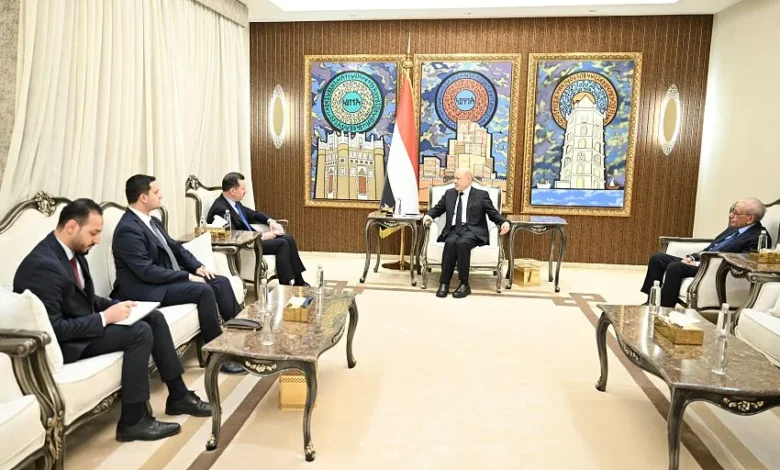
This came during his reception on Monday of the Chargé d’Affaires of the Turkish Embassy to Yemen, Emrullah İşler, where the two sides discussed bilateral relations between the two countries and prospects for their development, in addition to the latest developments in Yemen and the region and issues of common interest.
Al-Alimi said that Yemenis view the Iranian challenge through a broader lens than the nuclear issue alone. He argued that the primary threat lies in the continued support and arming of militant groups that undermine state institutions and threaten regional security as well as international maritime routes.
He added that temporary agreements focused on containing crises without addressing their underlying causes would remain fragile and incapable of delivering lasting peace. According to Al-Alimi, sustainable stability requires respect for state sovereignty, an end to support for militias, and the disruption of their funding and weapons supplies.
On bilateral relations, Al-Alimi praised the strong ties between Yemen and Turkey, expressing appreciation for the humanitarian, relief, and development assistance provided by Ankara over recent years. He also highlighted Turkey’s role in hosting thousands of Yemenis and providing educational, medical, and employment opportunities.
The Yemeni leader welcomed the resumption of Turkish support and cooperation programs and stressed the importance of expanding partnership in education, healthcare, infrastructure, and energy sectors to support government priorities and improve living conditions.
He also reviewed government efforts to implement institutional and economic reforms, improve public revenues and essential services, and strengthen the performance of security and military institutions in support of stability and development in government-controlled areas.
The statement comes amid reports that Pakistan announced a framework memorandum of understanding between the United States and Iran aimed at ending hostilities and halting military operations after months of regional escalation stretching from the Strait of Hormuz to Lebanon and global energy markets.
According to the report, the proposed agreement includes a ceasefire across all fronts, the lifting of the U.S. maritime blockade on Iranian ports, the reopening of the Strait of Hormuz to international shipping, and the launch of a 60-day negotiation process covering technical and political issues, including Iran’s nuclear program, sanctions, and mechanisms for implementing commitments between Washington and Tehran.