Yemen Monitor / Newsroom:
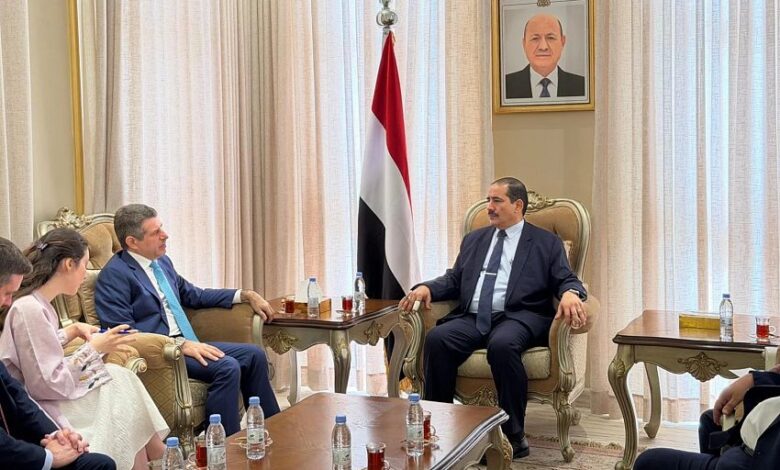
The Minister of Interior in the Yemeni government, Major General Ibrahim Haidan, met today with the U.S. Ambassador to Yemen, Steven Fagin, to discuss security plans aimed at enhancing stability in the capital, Aden, and government-controlled areas.
According to the state-run “Saba” news agency, the meeting covered security arrangements in the temporary capital, Aden, and strategies to consolidate security and order. They also discussed international support for the Ministry of Interior to bolster counter-terrorism efforts and strengthen institutional security.
This marks the first time security arrangements in Aden have been explicitly addressed in a high-level diplomatic meeting. Analysts view this as a signal of the government’s intent to tighten its grip on security and accelerate the restructuring of forces that previously managed Aden—formations originally established by the Transitional Council with Emirati support and later incorporated under the Ministry of Interior’s framework.
During the meeting, the Interior Minister praised the support provided by the United States to the Ministry, specifically citing the border control program and the electronic visa project, alongside several vital projects developing security operations and departmental capabilities.
The Minister also pointed to the threats posed by Houthi militia practices and “adventures” that serve the Iranian agenda, noting the danger they present to citizen safety, neighboring countries, and international shipping lanes.
For his part, the U.S. Ambassador reaffirmed his country’s continued support for the Yemeni government and the Ministry of Interior’s efforts to enhance stability and back programs aimed at developing security capacity and combating terrorism.
Local analysts suggest the Ministry of Interior is mobilizing regional and international backing for its steps to secure Aden and the governorates of Abyan, Lahj, Al-Dhale, and Shabwa—areas previously under the Transitional Council’s control. By emphasizing counter-terrorism with U.S. officials, the Ministry appears to be positioning itself as the primary partner in the fight against Al-Qaeda (which has a significant presence in Shabwa and Abyan), potentially shifting the role away from the Transitional Council, which had long presented itself as the exclusive agent in that conflict.