Rights Statement Holds Presidential Council and Coalition Responsible for Continued Detention in Hadramawt Despite Release Orders

Yemen Monitor / Hadramawt / Exclusive:
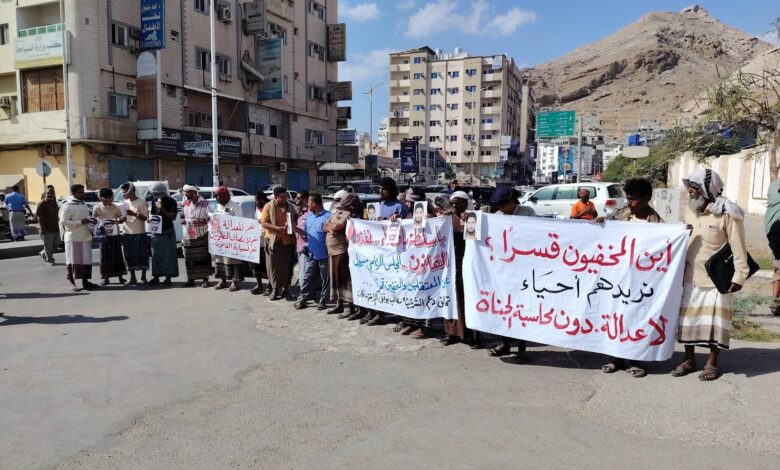
The Committee for Victims of Secret Prisons, Detainees, and the Forcibly Disappeared has condemned the ongoing detention of citizens in Hadramawt Governorate (eastern Yemen), despite explicit judicial orders for their release issued more than five years ago. The committee described the disregard for these rulings as a “complete crime.”
In a statement released Wednesday, the committee asserted that the continued detention of these individuals undermines state prestige and constitutes a blatant violation of the principle of the rule of law. It noted that enforced disappearance is a crime that does not expire under the statute of limitations, demanding the immediate disclosure of the fate of all missing persons and the assurance of their safety.
Holding Direct Responsibility
The statement held the Yemeni Presidential Leadership Council (PLC), the Coalition to Support Legitimacy, and the local authority in Hadramawt governorate directly legally and morally responsible for the file of detainees and the forcibly disappeared. The committee demanded immediate and public measures to ensure the implementation of release orders and to hold those involved in these violations accountable.
The statement explicitly pointed out that the continuation of these violations represents a persistence of the “Emirati approach” in handling the detainee file, warning that silence or complicity in these crimes makes the relevant authorities partners in them.
Four Key Demands
The committee outlined four primary demands to address this humanitarian issue:
- Immediate Execution: The unconditional implementation of all release orders issued by the judiciary.
- Disclosure: Revealing the fate of all forcibly disappeared persons and handing them over to their families.
- Accountability: Opening independent and transparent investigations to hold those involved in illegal detentions accountable.
- Redress: Providing material and moral compensation to the victims and restoring their reputation.
The committee concluded its statement by emphasizing that “delayed justice is denied justice,” asserting that the rights of victims do not expire over time and that achieving justice for them is not a “favor” but an inherent right guaranteed by national laws and international conventions.