Yemen Monitor / Newsroom:
The Kingdom of Saudi Arabia and the Republic of Turkey have renewed their absolute commitment to supporting Yemeni legitimacy and preserving the country’s territorial unity. They affirmed their categorical rejection of any actions aimed at dividing Yemen or empowering internal entities seeking to undermine its security and stability.
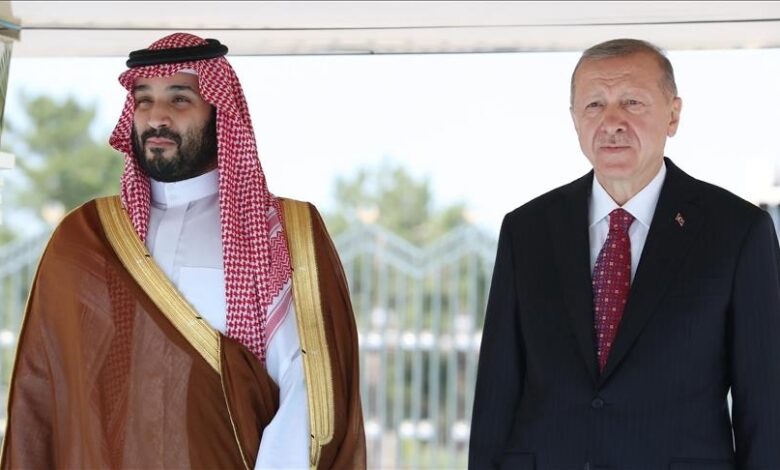
This came in a joint statement issued today, Wednesday, at the conclusion of an official visit by Turkish President Recep Tayyip Erdoğan to the Saudi capital, Riyadh. During the visit, he held an expanded discussion session with Saudi Crown Prince Mohammed bin Salman, addressing the latest developments in the region, foremost of which is the Yemeni file.
Both sides emphasized in the statement their full support for the Presidential Leadership Council chaired by Dr. Rashad Al-Alimi and for the internationally recognized Yemeni government, noting that preserving Yemen’s sovereignty, unity, and territorial integrity is a fundamental pillar of regional security.
Key points of the joint statement regarding the Yemeni crisis included:
- Confronting Partition Schemes: Both sides adopted a firm stance against attempts to divide the country and stressed the necessity of confronting any efforts aimed at supporting “parallel entities” or internal groups that seek to create instability.
The Turkish side commended Saudi efforts to host a “comprehensive conference in Riyadh” that brings together all components of southern Yemen, in response to the request of the Chairman of the Presidential Leadership Council, with the aim of enhancing national consensus and thwarting separatist projects.
Ankara praised the Kingdom’s pivotal role in leading diplomatic and relief efforts and supporting pathways to end the years-long conflict.
Observers note that the language of the joint statement reflects a remarkable alignment of views between the two regional powers (Riyadh and Ankara), as the political terminology used focused on the concept of “one state” and the rejection of “separatist projects.”