Yemen Monitor / Sanaa / Special:
A senior official has confirmed that the European Union will maintain its offices in Yemen, despite the decision by the United Nations World Food Programme (WFP) to suspend its operations in large areas under Houthi control due to security concerns.
In statements to The National newspaper, published in English, European Commissioner for Humanitarian Aid Hadja Lahbib said there is a growing dilemma, noting that “saving lives is increasingly costing the lives of those who are specifically trying to deliver aid and alleviate suffering.”
Yemen is facing one of the world’s worst humanitarian crises after more than a decade of civil war. On Friday, the United Nations warned that around 21 million people are in urgent need of assistance to survive.
The withdrawal of the WFP—resulting from security concerns and harassment by the Houthis, who control the most densely populated areas, including the capital Sanaa—is expected to further exacerbate the widespread hunger crisis.
Lahbib added: “In the face of the rising number of casualties among humanitarian workers, some non-governmental organizations and some of our partners have, unfortunately, decided to withdraw.”
European Civil Protection and Humanitarian Aid Operations (DG ECHO) maintains offices in Sanaa and in Aden, which serves as the seat of Yemen’s internationally recognized government.
Lahbib explained: “We still have a point of entry—a contact point and an office—and representation of our ECHO offices in both Sanaa and Aden.”
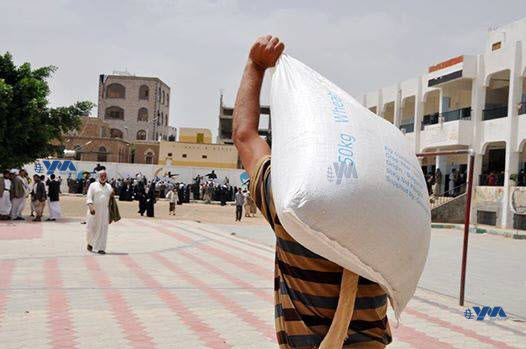
The closure of WFP offices comes at a time when 18 million people are experiencing acute food insecurity and face the risk of famine. UN officials reported that their agencies are unable to deliver assistance in Houthi-controlled areas—which account for approximately 70 percent of humanitarian needs—due to harassment.
The EU allocated €120 million in aid to Yemen in 2025, including an additional €40 million in September to address the crisis and prevent famine-like conditions. The EU’s Humanitarian Air Bridge operation also delivered more than 432 tons of supplies as part of the response to a cholera outbreak.