Yemen Monitor / Newsroom:
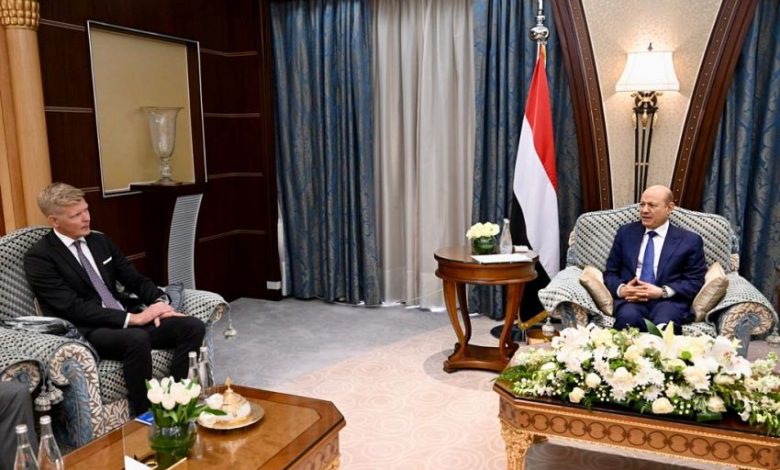
The United Nations Special Envoy for Yemen, Hans Grundberg, concluded an official visit to the Saudi capital, Riyadh, today. The visit is part of intensive efforts to enhance engagement with Yemeni, regional, and international parties to push for de-escalation and revive the political track.
During his meeting with the Yemeni Prime Minister, Salem bin Buraik, the Envoy discussed the latest political developments and the deteriorating economic conditions and their direct impact on citizens’ livelihoods. The talks emphasized that achieving economic stability is a fundamental pillar for creating an environment conducive to peace, stressing the need to coordinate efforts to address economic pressures in parallel with the political process.
In a highly sensitive humanitarian matter, the Special Envoy met with the Yemeni Government’s Prisoners and Detainees Committee, alongside representatives from the Coalition. They followed up on the results of the recent negotiations hosted in Muscat and ongoing efforts to finalize the lists of detainees scheduled for release in the next phase. The Envoy stressed the importance of maintaining momentum and turning understandings into practical steps, given the profound humanitarian impact of these releases on thousands of Yemeni families.
Grundberg also held a series of meetings with several ambassadors and members of the international diplomatic corps. He discussed political and economic updates in Yemen and the region, emphasizing the importance of continued international support to reduce escalation and move forward toward a comprehensive and sustainable political process.
Yesterday, Wednesday, Grundberg provided a briefing to the UN Security Council, noting that instability is clearly visible in the economy through rising prices, delayed salaries, and deteriorating basic services. He asserted that any political or security disturbance, even a brief one, could double the pressure on the currency, deepen the fiscal deficit, and obstruct reform efforts.
He stressed the importance of neutralizing economic institutions, including the Central Bank, from political and security disputes and maintaining momentum in the economic reform agenda. He pointed out that political, economic, and security challenges are interconnected and cannot be addressed in isolation.
Furthermore, he affirmed that the future of South Yemen cannot be determined or imposed by force by any single party. He stated that the initiative launched by President Rashad Al-Alimi to hold a dialogue conference hosted by Saudi Arabia provides an opportunity to begin addressing the Southern issue through political participation. He noted that the security situation in parts of the South remains fragile and that the Southern issue is closely linked to fundamental questions regarding the future of the state, security arrangements, and economic governance.