Yemeni Presidential Advisor: 24-Hour Deadline for Emirati Forces Sends Message of Rejection of Foreign Interference

Yemen Monitor – Newsroom:
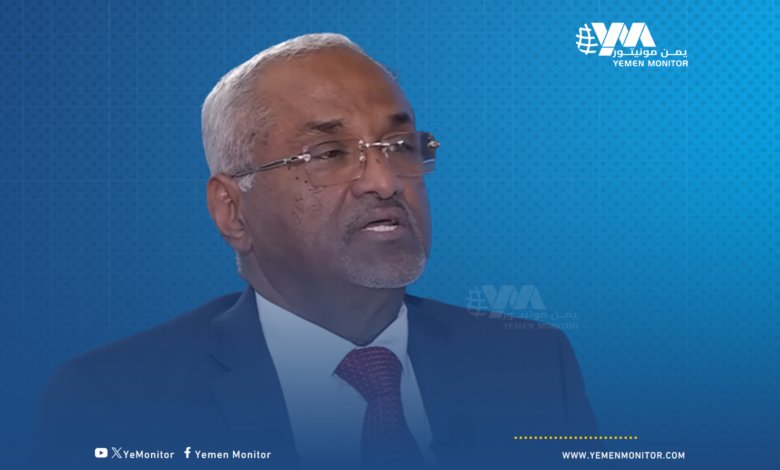
Badr Basalma, Advisor to the Chairman of the Yemeni Presidential Council for Local Administration Affairs, stated that the decisions to declare a state of emergency by the Chairman of the Presidential Leadership Council came as a result of a clear violation of the constitutional legitimacy based on the Riyadh Agreement and the outcomes of the power transfer.
He emphasized that this step reflects a sharp political and military escalation that necessitates a decisive response.
Basalma clarified that the Southern Transitional Council (STC) exploited the cover of legitimacy to pursue private agendas rather than serving the southern cause as promoted. He noted reports of two ships loaded with heavy weapons entering areas controlled by the STC’s militias in the past two days, representing a serious military escalation.
He mentioned that the STC has expressed its desire to declare an independent state linked to Israel, in an attempt to seek international recognition for this entity, similar to the “Somaliland” model, which has only been recognized by Israel.
In a related context, he described the 24-hour deadline set by the Presidential Council for the withdrawal of Emirati forces as a message rejecting any attempts to use military force or external pressure to change the political landscape on the ground.
The advisor pointed out that Hadramawt province has strongly rejected previous scenarios witnessed in Yemen, whether during the era of the Socialist Party or under power centers in Sana’a. He stressed that Hadramawt’s choice is clear between establishing a just federal state that guarantees the rights of all or pursuing a separate secessionist project if national dialogue fails.
He affirmed that reliance on weapons to impose opinions remains at the core of the current crisis, noting that the STC is neither the sole nor the legitimate representative of the southern cause, as it claims.
This escalation comes amid fears of a widespread armed conflict, with warnings that the situation will remain unchanged without just political solutions.
Media sources stated that these developments indicate intensifying political and military conflicts in Yemen, emphasizing the necessity to activate dialogue tracks and strengthen legitimacy in accordance with what was agreed upon in Riyadh.
This stance reflects a rising dynamism in the Yemeni scene, amid conflicting regional and internal interests and attempts to forcibly redraw the political map, making the preservation of national stability an exceptionally critical challenge.