Yemen Monitor – Washington – Exclusive
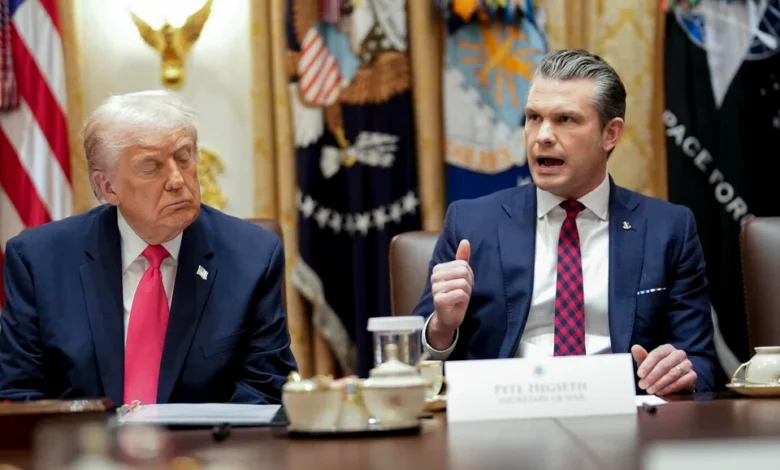
An internal investigation by the U.S. Department of Defense (Pentagon) has concluded that Defense Secretary Pete Hegseth should be reprimanded for using the encrypted messaging app Signal on his personal phone to transmit sensitive information concerning U.S. aerial military strikes in Yemen.
Although the probe noted that this action could have put American forces at risk had the messages been intercepted, the Pentagon deemed the matter “closed” and ultimately cleared the secretary—an outcome that has reignited debate over the security of U.S. military operations in the Red Sea and Yemen.
According to U.S. media outlets, sources familiar with the investigative report—conducted by the Pentagon’s independent inspector general—revealed that Hegseth shared highly detailed information regarding imminent strikes targeting Iran-aligned Houthi fighters in Yemen on March 15 of this year.
The sources said the secretary sent this information to a group that included senior national security officials serving President Donald Trump. But unexpectedly, Jeffrey Goldberg, editor-in-chief of The Atlantic magazine, was mistakenly included in the group. His presence later led to the disclosure of the chat’s contents, including screenshots of the conversations.
The leaked messages showed that Hegseth had been discussing specific plans to assassinate a senior Houthi military commander in Yemen—just two hours before the covert operation was set to begin.
The inspector general’s report confirmed that the information shared was classified at the time it was transmitted. It warned that interception of the messages could have allowed Houthi leaders to flee or take shelter in densely populated areas, complicating the operation and increasing the likelihood of civilian casualties, in addition to endangering the lives of the American personnel carrying out the mission.
The U.S. defense secretary defended his actions, telling the inspector general in a written statement that, as head of the Pentagon, he has the authority to declassify information at his discretion. Hegseth insisted he shared only details he believed did not pose an immediate operational risk.
Despite the report’s criticism of the secretary’s conduct—and his refusal to sit for an in-person interview with investigators—Pentagon spokesperson Sean Parnell announced that the review had “cleared” Hegseth, stating, “This matter has been resolved, and the case is closed.”
The revelation comes at a sensitive moment for Hegseth, who is facing growing scrutiny over his leadership of various military operations, including deadly strikes on suspected drug-smuggling vessels in the Caribbean.
His use of the Signal app has puzzled Democrats and former officials, who argue that details involving timing and targeting lie at the heart of highly classified information that must be rigorously protected ahead of any military campaign—particularly in a complex environment like Yemen.