Yemen Monitor / Bloomberg:
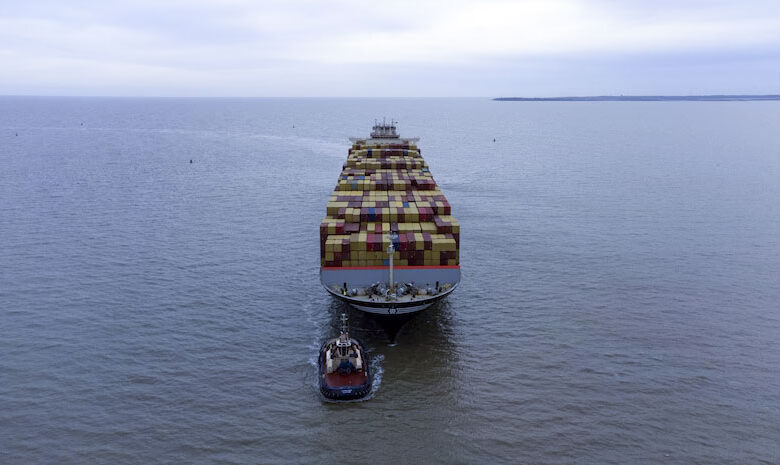
Despite the Houthi group’s announcement of its readiness to halt attacks on ships in the Red Sea, conditional on the continued cessation of the war in the Gaza Strip, global shipping companies remain hesitant to resume transit through this vital passage after nearly two years of disruptions.
The Bloomberg agency reported that the media offices of the world’s three largest shipping companies—which collectively account for about half of global operating capacity—confirmed their commitment to the policy of avoiding the Red Sea route for the time being.
Peter Sand, Chief Analyst at maritime shipping firm Xeneta, said that some companies are “cautiously testing the waters,” noting that the French company CMA CGM sailed two large vessels through the Suez Canal this month. However, he stressed that “even with the reduced risk level, a rapid return to the traffic levels recorded in 2023 is not expected.”
Sand explained that shipping carriers face a sharp financial challenge, as spot freight rates have fallen by more than 50% since the beginning of the year. He warned that an early return to the shorter Red Sea route could lead to an “overcapacity and an additional collapse in prices.”
Xeneta’s estimates indicate that diverting ships around the Cape of Good Hope absorbed about two million Twenty-foot Equivalent Units (TEUs), which is equivalent to 6–7% of global capacity. This contributed to keeping prices relatively stable despite the drop in demand.
According to data from the International Monetary Fund (IMF) and Oxford University’s Port Watch platform, the average number of ships passing through Bab el-Mandeb Strait was 31 per day as of last Sunday. This is the same level recorded since January 2024, and less than half the traffic the strait saw in November 2023 before the widespread diversions began.
In this context, Lars Jensen, CEO of Vespucci Maritime consulting, advised against rushing to talk about the resumption of navigation through the Red Sea, stressing that “the truce between Israel and Hamas remains very fragile.”
He added in a LinkedIn post that it is too early to consider the Houthi announcement an indication of a swift return for shipping companies, pointing out that this would require a “significant shift in the level of risk tolerance compared to eight months ago.”
Jakob Larsen, Head of Safety and Security at the international organization BIMCO, also confirmed that the stability of the truce in Gaza will be the decisive factor for ships returning to the Red Sea route.
He said in an email statement: “A collapse of the truce could lead to a resumption of attacks on Israel-linked vessels, while its stability and the continuation of the ceasefire may allow a gradual return of navigation in the area.”
While the maritime sector awaits developments, Bloomberg predicted that global shipping rates could fall by as much as 25% by 2026 even if the current situation persists.
Analysts believe that the “balance between maritime security and economic pressures” will remain a key factor in determining the future of trade through the Red Sea, through which more than 12% of global trade passed before the crisis.