Yemen Monitor/Marib/Exclusive:
The fall of the capital Sana’a to the Houthis on September 21, 2014, was not a result of sudden militia strength so much as it was the culmination of a deliberate and facilitated collapse from within the state apparatus itself.
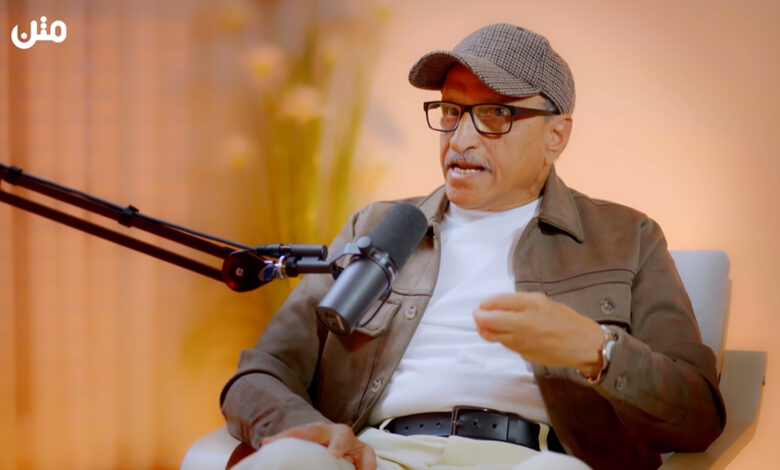
This was confirmed by Brigadier General Dr. Omar Abdulkarim, the then-Director of Security for the Capital, in a shocking testimony given on the “Yamaniyun” podcast hosted by journalist Bashir Al-Harithi, monitored by “Yemen Monitor.” He revealed the official surrender directives and the humiliation suffered by the security forces during that pivotal night.
The Secret Telegram: The “Handle Gently” Order That Broke the State’s Back
Dr. Abdulkarim revealed that they received instructions from the Operations Room at the Ministry of Interior, shortly before the final Houthi takeover, to handle the militia “gently” and avoid clashing with them. He indicated that this directive was understood as an implicit surrender, stating: “They had entered the ministries little by little… until they entered the Council of Ministers.”
This directive was not an explicit surrender in its wording, but it was in its effect, as it denied the security agencies and police their right and duty to enforce the law and defend the capital. The revelation that security agencies received an official telegram instructing them not to deal harshly with the Houthi group is considered the “straw that broke the camel’s back” for the state, as this directive represented a political and security decision to abandon the duty of defense.
These instructions came at a time when the Houthis were besieging Sana’a and using the demand to “lift subsidies on petroleum products” as a cover to overthrow the state. The goal was to neutralize the last remaining line of defense in the capital, after large military units had been depleted in previous stages.
The telegram led to immediate repercussions—according to Brigadier General Abdulkarim’s testimony—as it caused officers and personnel to feel abandoned and betrayed by their leadership, completely destroying the morale of the security apparatus. When Houthi elements began entering ministries and facilities “little by little,” they met no resistance, and the ministries and headquarters were turned into areas of control through “silent official complicity.”
The Fabricated Security and Military Vacuum
Even so, the security agencies would not have been capable of resistance even without the telegram, due to the systematic disintegration they had suffered—as indicated by the testimony of Brigadier General Abdulkarim.
Abdulkarim confirmed the absence of any real coordination between the intelligence agencies (Political Security, National Security, and the Security Directorate), which led to complete security blindness regarding Houthi movements and mobilization. These agencies had become lax due to political quotas and the appointment of incompetent leaders who did not think in terms of “security and tactical matters.”
He asserted that the security situation was unenviable, and coordination between the security agencies (Political and National) was nonexistent. Their task was limited to “alternating” shifts at night without any real confrontation plan.
Before the fall, Sana’a Security Directorate was being daily depleted by secondary issues, continuous fabricated demonstrations (led by loyalists to the former regime), in addition to a wave of random assassinations—Abdulkarim says.
He added: This draining of our “energy” and “time” left the remaining forces exhausted and confused, and unable to focus on the real threat.
He states: “At the decisive moment, the leadership’s stance was a ‘passive stance’ and not a ‘firm stance.'” The Minister of Interior at the time disappeared after the military situation exploded in Amran, and the security agencies in the capital were left without clear leadership cover, save for the sterile “alternating” directives.
The Scene of Humiliation: “Go Down and Kiss His Knee”
In the final scene, the matter was not limited to surrender but reached the point of humiliation and recognition of the new militia’s authority—says Brigadier General Abdulkarim’s testimony.
When Brigadier General Abdulkarim arrived at the Directorate’s headquarters, he found officers “welcoming the Houthi.” “Abu Ali Al-Hakem” (one of the most prominent Houthi field commanders) was downstairs, exercising his authority as the “de facto ruler,” exploiting the flight or disappearance of the official leaders.
Brigadier General Abdulkarim recounts a painful incident that occurred at the Security Directorate when the Houthis ascended, where his officers told him that “Abu Ali Al-Hakem” (the prominent Houthi leader) was downstairs, and said mockingly: “Go down and kiss his knee.” He affirmed that he refused to go down, preferring to leave “with his head held high” as a statesman rather than face humiliation.
Abdulkarim’s refusal to go down to “kiss his knee” was symbolic of the stance of state officers who clung to their military and legal honor, despite being a tiny minority in the face of an influx of arriving forces and complacent leaders.
He pointed out that his method of leaving Sana’a was difficult and required mediation, while his former colleague who was appointed Director of the Legal Administration, Dr. Rashad al-Alimi (currently the Chairman of the Presidential Leadership Council), was seen leaving on the same plane easily through “protocol channels,” suggesting facilitation from the former regime.
He noted that the senior GPC (General People’s Congress) leaders and security commanders “took control” of state headquarters, and then “columns” headed towards Abdulmalik al-Houthi, which confirmed that the Houthi takeover was not purely military, but was facilitated by former allies in the deposed regime.
Brigadier General Dr. Omar Abdulkarim’s testimony confirms that the moment of September 2014 was the culmination of a long path of deliberate internal dismantling and political opportunism, where successive leaders after 2011 paved the way for the militia by weakening the army and security and succumbing to the “Surrender Telegram” under various pretexts, making the fall an inevitable result of the loss of the state’s will.