Yemen Monitor/Reports Unit/Exclusive:
The Houthis are bracing for weeks of escalating tension with tribal groups and the General People’s Congress (GPC) party that could devolve into an internal war. The Houthis have intensified security operations in Sana’a and neighboring governorates to prevent any popular movement from emerging under a political or tribal cover in areas they control.
Houthi security officials working in three security sectors in the capital, Sana’a (western, central, and northern), told “Yemen Monitor” on condition of anonymity due to the sensitivity of the situation that high-level directives and reinforcements have arrived in these sectors in recent days. They are now conducting nightly patrols and intensive monitoring.
A Houthi military official added, “They (the GPC and tribes) want to act in conjunction with the military buildup on the Saudi-Yemeni border,” noting that government forces have mobilized in Hajjah and Saada governorates over the past few days. This coincides with the anniversary of the founding of the GPC and the anniversary of the establishment of the Republic and the fall of the imamate.
On July 31, the Houthi leader vowed to confront these attempts. Houthi officials say it is a major US/Israeli plot to destabilize the internal front and that the GPC and tribes are implementing a “Zionist agenda” to prevent them from “supporting Gaza.” However, this propaganda is no longer sufficient to deter the rising anger in Houthi-controlled areas.
In parallel, the movement has launched a widespread arrest campaign in Sana’a, Dhamar, Amran, Ibb, and Taiz, targeting loyalists of the GPC and members of the Yemeni Islah Party. It is estimated that more than 100 people have been arrested since mid-July.
This coincides with a general Houthi security and military mobilization, as well as an abundance of training courses and armament for their loyal families and fighters in Sana’a and Amran. According to informed sources, this is in anticipation of a major explosion that would be difficult to control with military force.

Monitoring the GPC: Houthis Keep a Watchful Eye on Former Allies
According to sources, the Houthi leadership has instructed its loyalists in security zones to monitor supporters and leaders of the GPC party and tribal sheikhs — including those who joined the group after 2017.
The Houthi leaders also ordered reports on any suspicious movements in the capital and in Amran governorate.
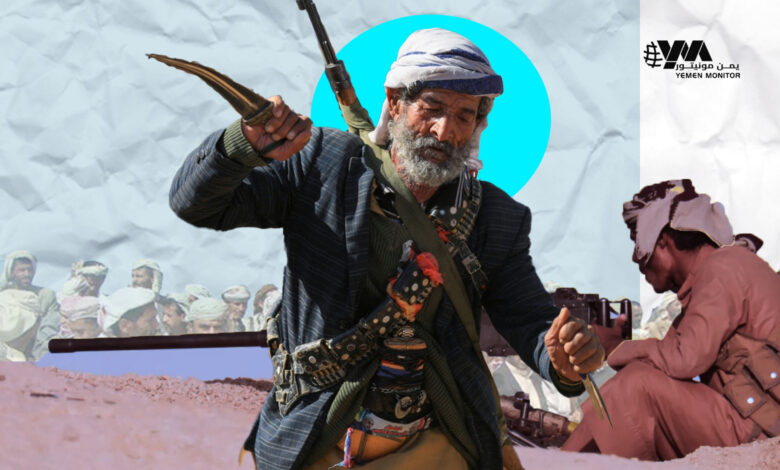
In tribal areas, tensions have escalated into mutual threats between Houthis and tribes. A tribal sheikh in Hamdan district said: Houthi leaders threatened him and two others against mobilizing fighters in their “councils and territories.” Similar threats were reportedly directed at other tribal sheikhs in Amran who spoke confidentially to Yemen Monitor.
The Houthis believe that “the United Arab Emirates is preparing to mobilize tribes and the GPC through Ahmed Ali Abdullah Saleh,” the son of former president Ali Abdullah Saleh — killed by the Houthis in 2017 — and deputy head of the GPC in Sana’a.
Earlier this month, a Houthi-run military court sentenced Ahmed Ali Saleh to death. A senior member of the GPC’s Permanent Committee said: the Houthis are pressuring party leader Sadeq Amin Abu Ras to dismiss Ahmed Ali “to avoid sedition,” but the party leadership has refused, demanding the Houthis provide evidence of what they call “treason.”
As part of their pressure campaign, the Houthis have begun cataloging the GPC’s and its leaders’ properties in preparation for confiscation, according to the GPC official in Sanaa who spoke to Yemen Monitor.
GPC leaders deny that any mobilization is being planned ahead of the party’s anniversary, insisting that if anything occurs, the party leadership has no involvement. This stance has fueled Houthi anger and tension.
A Houthi official said the GPC and allied tribes aim to build their movement around popular demands such as salaries, living allowances, and the worsening humanitarian crisis with aid organizations departing.
Houthi leaders view this as the greatest challenge the group has faced since 2017.
Escalating Tribal Discontent
Discontent is escalating in Houthi-controlled areas due to widespread injustices and the humiliation of tribes and their leaders. On August 13, the Houthis demonstrated their power in front of the home of Sheikh Hemyar Al-Ahmar, the paramount chief of Hashid tribe, in Al-Hasabah neighborhood.
A Houthi official told “Yemen Monitor” that “Sheikh Hemyar Al-Ahmar gathers tribal sheikhs in his council almost daily, inciting them against the state (the Houthi authority).” The official noted that Al-Ahmar discusses the injustices committed by the Houthis and is attempting to resolve them within tribal areas and marginalize the role of sheikhs loyal to the movement, in addition to settling internal tribal issues away from Houthi institutions.
Two days after this show of force, Sheikh Hemyar Al-Ahmar appeared in a personal photo at his home in Al-Hasabah next to one of his horses and met with a number of tribal sheikhs.
It seems the situation goes beyond a military display. Tribal sources have confirmed they have monitored the transfer of weapons to the governorates of Amran and Harf Sufyan and neighboring districts in Saada, Hajjah, and Al-Mahwit. Residents in the “Qutaynah” district also confirmed the arms transfers. In Bani Al-Harith, residents said the Houthis moved weapons to “Bani Hewat.”
As of the writing of this report, there has been no widespread tribal movement, with the exception of a protest by the “Al-Salem” tribes from Saada governorate in Al-Sabeen Square to demand the release of detainees.
However, this does not mean the situation is not tense. According to one military official and two tribal sheikhs in Amran, this level of tension has not occurred since 2017.
Military Mobilization
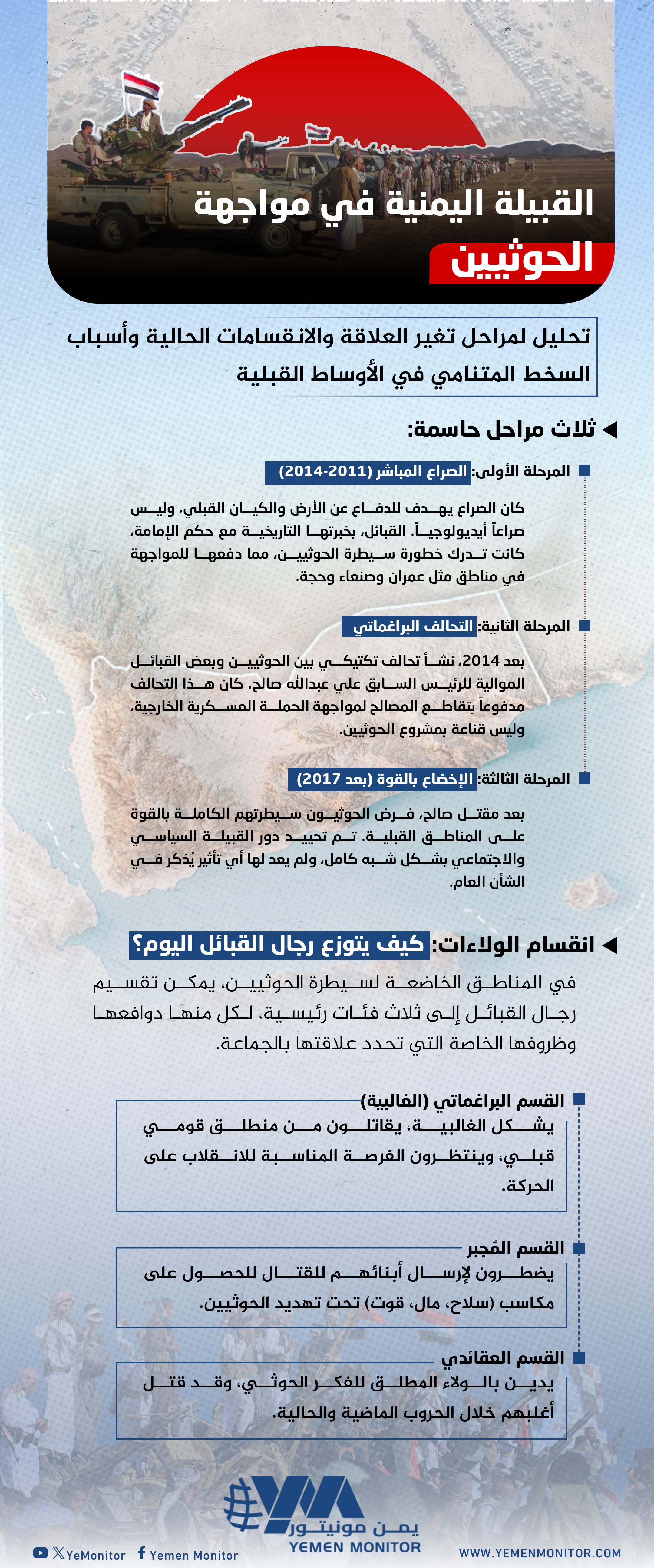
The Houthis fear a political-tribal alliance bringing together the family of former President Ali Abdullah Saleh, the GPC in Sana’a, and the family of Sheikh Abdullah bin Hussein Al-Ahmar, the paramount chief of Hashid tribe.
According to Houthi fighters—who are also from the tribes—the Sixth Military Region (Saada, Amran, and Al-Jawf) raised its state of alert to the highest level on August 13, recalling all soldiers on leave.
The sources stated that the Houthi-affiliated Sixth Military Region “will take charge of everything in the three governorates during the coming period until internal threats subside.”
On Sunday, a large meeting was held in the Sixth Military Region, chaired by its commander, Jamil Zar’ah. It included the governors of Saada, Al-Jawf, and Amran, along with a number of sector commanders, and security, intelligence, and mobilization officials from the three governorates.
The group’s media reported that the meeting reviewed reports that “monitor the enemy’s military and security movements on some fronts, and widespread incitement campaigns on a popular and community level. But they will fail due to the readiness of the armed and security forces and the awareness and solidarity of the people.”
The sources in this report spoke on condition of anonymity due to the sensitivity of the subject and fear of Houthi retaliation.
The Future of the Tension
These Houthi movements show that the group is now aware of the scale of the internal challenges it faces, which may be more dangerous than the external confrontation. While the Houthis tighten their security grip on Sana’a and surrounding governorates, the boiling tribal anger and tension with yesterday’s ally, the GPC, portends a new stage of conflict that could erupt at any moment. The question remains open as to whether these security measures will succeed in extinguishing the spark of anger or will accelerate its ignition.