Yemen Monitor / Newsroom:
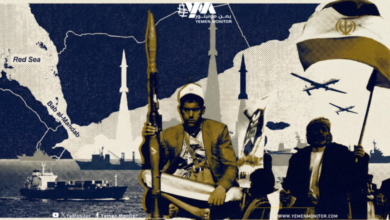
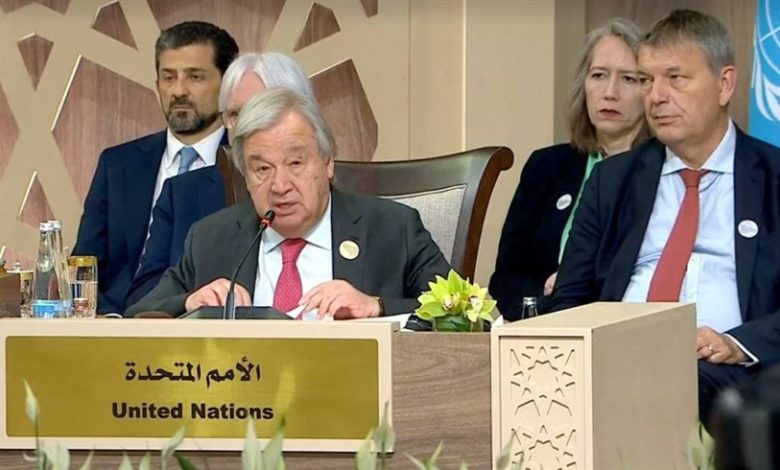
UN Secretary-General António Guterres expressed his deep concern over the Houthi group’s resumption of attacks on commercial vessels in the Red Sea, warning that continued escalation could widen the scope of the regional conflict and undermine prospects for peace in Yemen.
In a statement issued by his spokesperson, Guterres said the attacks claimed by the Houthis threat to drag Yemen deeper into the furnace of regional tensions, emphasizing that any new hostiles within Yemen could have severe economic, humanitarian, and environmental repercussions for the region and beyond.
The Secretary-General called on the Houthis to cease any escalatory actions or launching new attacks on ships, demanding an immediate de-escalation and adherence to relevant Security Council resolutions, foremost among them Resolution 2722 of 2024, which calls for ensuring freedom of navigation and the safety of commercial vessels in the Red Sea.
Guterres stressed the need to fully restore international freedom of navigation in Bab al-Mandab Strait and surrounding areas amid rising concerns over the impact of maritime attacks on global trade traffic.
In the same context, the Secretary-General of the International Maritime Organization (IMO), Arsenio Dominguez, condemned the recent attacks on international shipping in the Red Sea, describing them as “unjustified.” He emphasized that they put the lives of seafarers at risk and threaten the security of navigation, the marine environment, and global supply chains.
Dominguez stated that de-escalation represents the only solution, stressing that seafarers are civilians performing vital duties to support world economies, and calling on ship operators to assess risks before crossing tense areas. He also renewed his demand for the release of seafarers detained following piracy attacks in the Red Sea and Gulf of Aden.
He further warned of the potential risks of marine pollution resulting from recent incidents in the Red Sea, in addition to the environmental consequences of previous incidents in the Strait of Hormuz area.
In a related context, UN High Commissioner for Human Rights Volker Türk called for urgent action to address the situation of thousands of seafarers stranded in the Strait of Hormuz, noting that around 6,000 seafarers aboard nearly 400 ships remain stranded in the area.
UN Human Rights Office spokesperson Shabia Mantoo stated that the organization received information indicating that some seafarers were left without support from ship owners, including crews of at least nine ships comprising 93 seafarers, explaining that they face growing risks as attacks continue in the region.
The Office called on states, ship owners, and relevant parties to ensure the protection of stranded seafarers, provide them with essential aid, and facilitate their evacuation and return to their countries, emphasizing that targeting civilian ships is unacceptable under international humanitarian law.
Yesterday, Thursday, the UN Special Envoy for Yemen, Hans Grundberg, confirmed that he had conducted intensive consultations over recent weeks with Yemeni, regional, and international parties, aiming to preserve the gains of the UN-brokered 2022 truce and prevent Yemen from sliding into a wider conflict.
Grundberg stated that the path remains open to changing course toward political negotiations that prioritize the interests of Yemenis, considering that reaching a negotiated settlement in Yemen could contribute to enhancing regional stability.
Regarding navigation security in the Strait of Hormuz, the Executive Director of the United Nations Office for Project Services (UNOPS), Jorge Moreira da Silva, announced that the UN Task Force on the Strait—established by the Secretary-General in March 2026—has developed a confidence-building mechanism to facilitate safe and orderly navigation.
He explained that the mechanism, which focused particularly on ensuring the flow of fertilizers and related raw materials to avoid a potential food crisis, is ready for implementation pending the approval of conflict parties and regional states, urging that it be given an opportunity to contribute to de-escalation.