Yemen Monitor – Newsroom:
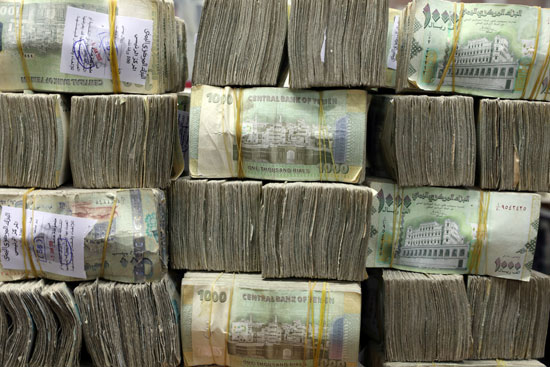
The Yemeni riyal has seen a significant improvement against foreign currencies in the interim capital of Aden and other government-controlled provinces. This comes after direct interventions by the Central Bank to regulate the exchange market.
According to banking sources, the purchase price for the Saudi riyal reached 532 Yemeni riyals on Thursday evening, with the selling price at 535. This is an unprecedented jump in value in months.
This positive development follows the Central Bank’s issuance of mandatory directives to exchange companies, setting a maximum purchase price for the Saudi riyal at 535 and a selling price at 538. These measures are part of a broader package aimed at stabilizing the local currency.
The bank’s governor, Ahmed Ghaleb, also announced the completion of the banking system’s relocation to Aden, the activation of the procurement committee, and stricter oversight of the banking market.
Economic expert Mustafa Nasr, head of the Center for Economic Studies and Media, noted that while the Central Bank’s recent actions had an immediate effect, they also exposed the fragility of the monetary market. He stated that the “rapid collapse followed by a sudden improvement in the exchange rate doesn’t reflect stability, but rather a state of chaos and speculation.”
Nasr explained that the root causes of the currency’s deterioration remain the lack of foreign currency reserves—especially with the halt of oil exports—and flawed financial and monetary policies. He called for clear political support for the Central Bank to enable it to implement real and sustainable reforms.
In a strong warning, Nasr cautioned citizens against engaging in speculation and unregulated market transactions. He emphasized that dealing with unlicensed exchange companies carries a high risk and could lead to certain losses due to the lack of controls.
He stressed that any improvement in the exchange rate is only a first step. He believes true stability depends on comprehensive political and economic reform, starting with a restructuring of the government and its decision-making mechanisms. He considers this an essential condition for achieving financial and economic stability in the country.