Yemen Monitor / Al-Araby Al-Jadeed:
The Israeli-Iranian conflict and the disruption of navigation in the Red Sea and Bab al-Mandeb Strait are raising increasing concerns among Yemeni traders and authorities. This is due to the rising costs of internal and external shipping and its impact on local markets and the prices of essential goods, at a time when the Yemeni currency is experiencing a sharp decline, nearing the 3,000 Yemeni Rial to the US dollar mark.
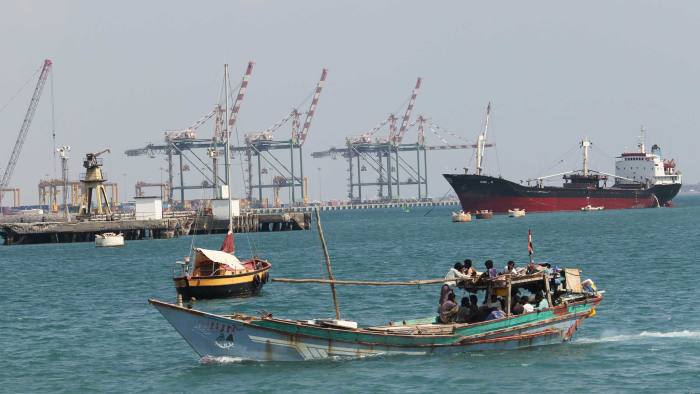
There’s a trend towards redirecting shipping traffic from Hudaidah port (northwest) to ports under the control of the internationally recognized government in the south. However, several importers are complaining about the slow readiness of Aden port to receive goods.
Trader Adel Al-Wardi explained to “Al-Araby Al-Jadeed” newspaper that shipping companies are now preferring to divert their goods to Aden, but the crisis persists due to the unpreparedness of the southern terminal amidst ongoing maritime tension.
Abubaker Ba’abaid, head of the Aden Chamber of Commerce, pointed out that the Yemeni economy is in a state of accelerating collapse, and that the rising cost of transport and fuel, coupled with the weakness of the local currency, means that any move will not change the overall economic picture.
On Wednesday, June 18, the head of Yemen’s Presidential Leadership Council held an urgent meeting in Aden with an economic and humanitarian crisis committee. During the meeting, they discussed the repercussions of the regional escalation and its impact on inflation, currency collapse, and commodity shortages.
The Yemeni Presidency warned the international community against the dangers of exploiting Yemen as an arena for escalation, noting that any attempts to arm or destabilize maritime passages could lead to a worsening of humanitarian and living crises.
The General Authority for Regulating Land Transport in Aden issued a decision to reduce freight charges from Aden port to the liberated governorates by 20%, starting from June 21. This also included a 50% reduction in the time limit for returning empty containers, in an attempt to ease the burden on supply chains and improve transport fluidity.
Despite a relative calm in Houthi naval attacks since May, a report by Sari Global, a company specializing in analyzing crises and humanitarian challenges, indicated on Friday that any Houthi decision to resume attacks on international passages would have direct repercussions on global trade, and could prompt the US to return to striking the group militarily.
The repercussions of the regional war and the ambiguity of the official response have led to a rise in transport and living costs in Yemen, amidst initial government moves to counter a continuous threat of worsening economic and humanitarian conditions in the country.