Yemen Monitor / Special Report:
The internationally recognized Yemeni government has accused the Houthi group of turning Kamaran Island, located northwest of Al-Hodeidah province (western Yemen), into a closed mass prison. Residents have reportedly been barred from leaving the island or communicating with the outside world following a complete shutdown of all communication services.
Ghaleb Al-Qudaimi, Deputy Director of the Human Rights Office in Al-Hodeidah, stated that there is information indicating that dozens of the island’s inhabitants have been forcibly disappeared after being accused of spying for the United States, following a wave of airstrikes that exceeded 80 raids in recent days.
In a related development, the Houthis launched a new wave of arrests in Al-Hodeidah city, targeting civilian employees of the Oil Company, including the head of public relations, Ahmed Talib Khan, and the deputy director of commercial affairs, Rami Ali Hanab.
Al-Qudaimi called on international and local organizations to urgently intervene to halt these serious violations, uncover the fate of the forcibly disappeared, and ensure the safety of all civilians. He warned that the continuation of such practices poses a grave threat to human rights in the province.
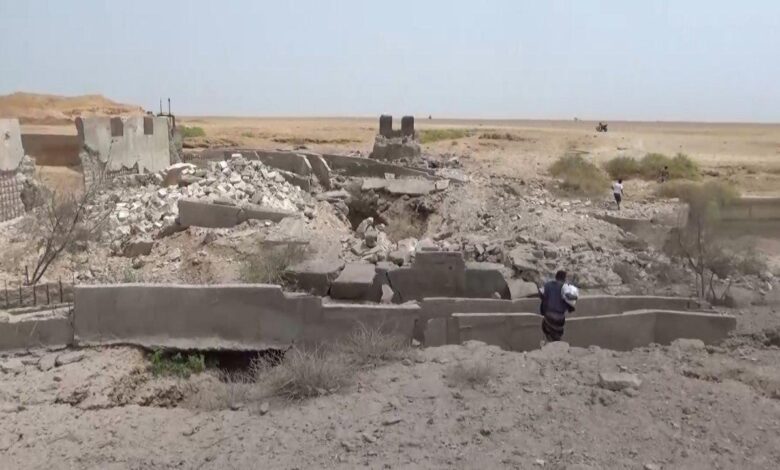
Over the past ten days, U.S. forces have carried out intensive airstrikes on Kamaran Island, which administratively belongs to the coastal province of Al-Hodeidah on the Red Sea.
Kamaran is the largest Yemeni island in the Red Sea and one of more than 40 islands scattered off the coast of Al-Hodeidah. It lies 6 km off the coast of Al-Salif Port and covers approximately 100 square kilometers. The island forms a security belt for the port, which was once used for salt exports. Its strategic importance stems from its location overlooking international maritime routes on the western side of the Red Sea.
At the southern tip of the island stands a circular lighthouse that aids in navigation for ships passing through the Red Sea.
Historically, Kamaran Island has held considerable significance. It is home to many archaeological landmarks, most notably the “Kamaran Fortress,” one of the oldest historical structures on the island, dating back to the Persian occupation in 620 CE. The fortress has undergone several restoration phases, including a major renovation in 1517 during the Portuguese campaign.