Monitor Monitor /Newsroom:
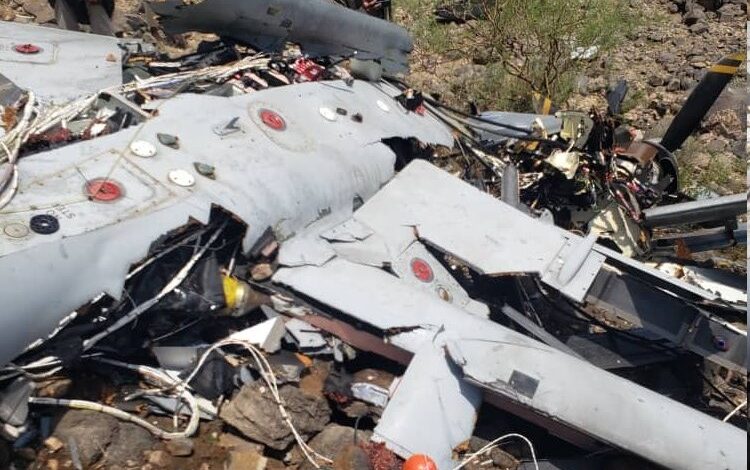
A U.S. official announced on Monday that the US has lost seven MQ-9 Reaper drones in Yemen since March, when it launched an intensified air campaign against the Houthi group. Each drone is valued at approximately $30 million.
MQ-9 drones are capable of conducting reconnaissance missions—a key component of U.S. efforts to identify and target the weapon sites used by the Houthis to attack vessels. They are also equipped to carry out airstrikes, with each unit costing around $30 million.
The official, who requested anonymity, stated: “Since mid-March, we have lost seven MQ-9 drones,” without specifying whether the drones were shot down by Houthi fire or lost for other reasons.
According to the same source, the seventh drone was lost on April 22. In addition to these losses, a U.S. fighter jet also went down Monday in the Red Sea from the USS Harry S. Truman aircraft carrier. The incident injured a sailor.
In 2021, the cost of this fighter jet—a Boeing-manufactured F/A-18—was $67 million.
On Monday night, Houthi-affiliated Saba News Agency reported that U.S. airstrikes targeted Harf Sufyan District (northwest Yemen) in three separate raids.
Early Tuesday, Houthi-affiliated Al-Masirah TV reported two similar strikes on Bani Hashish District northeast of the capital, Sanaa.
Houthi-held areas in Yemen have faced near-daily airstrikes since Washington announced the launch of a military operation on March 15 aimed at halting Houthi attacks in the Red Sea and the Gulf of Aden.
On Sunday evening, the U.S. military announced that the US has struck more than 800 targets in Yemen since mid-March, resulting in the deaths of hundreds of Houthi fighters, including members of the group’s leadership.
The Houthis—who consider themselves part of the Iranian-led “Axis of Resistance” against Israel and the US—say they are acting in support of Gaza in the ongoing war between Israel and Hamas.
Houthi attacks have paralyzed navigation through the Suez Canal, a vital waterway that normally handles about 12% of global maritime traffic, forcing many shipping companies to resort to costly alternative routes around the Cape of Good Hope in southern Africa.
(AFP)