Yemen Monitor / Newsroom:
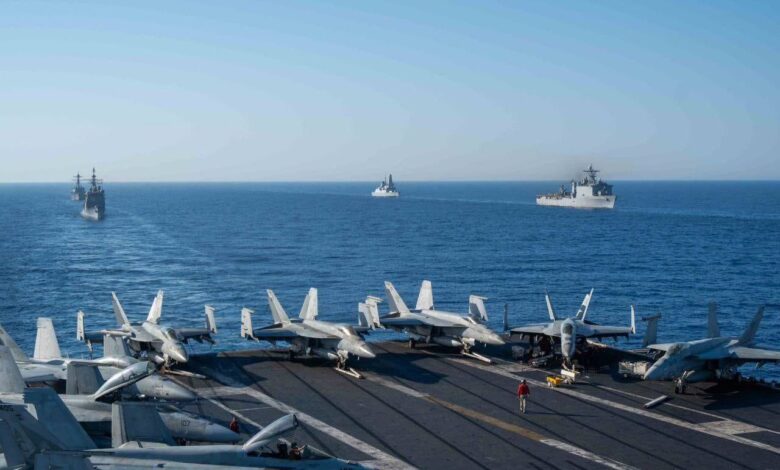
Two U.S. officials familiar with operations in Yemen told CNN that the US has struck over 700 targets and launched more than 300 airstrikes since the campaign began on March 15, forcing Houthi leadership to go underground.
The officials noted that the strikes have compelled the Houthis to remain underground for extended periods and have left them in a “state of confusion and disarray.” However, the continued loss of drones has made it difficult for the U.S. to accurately assess the degradation of Houthi weapons stockpiles.
According to the officials, over the past six weeks, the Houthis have launched 77 attack drones, 30 cruise missiles, 24 medium-range ballistic missiles, and 23 surface-to-air missiles targeting U.S. forces, ships in the Red Sea, and “Israel.”
Recent intelligence assessments indicated that the Houthis’ ability to continue attacks has not been significantly impacted by U.S. strikes, and their command structure remains intact. The assessments relied primarily on intelligence signals, the officials confirmed.
The US had hoped to achieve air superiority within 30 days and weaken the Houthis’ air defenses in preparation for targeting their leadership. However, the loss of MQ-9 Reaper surveillance drones hindered those plans, as the Houthis became more accurate in shooting them down. The U.S. relies heavily on these drones to assess battle damage, given the absence of ground forces in Yemen.
Meanwhile, U.S. Central Command spokesman Dave Eastburn stated that the strikes destroyed Houthi command facilities and air defense systems, resulting in the death of 650 Houthi fighters. He also noted an 87% decrease in missile attacks and a 65% drop in drone attacks.
Nevertheless, the Iran-backed Houthis have shown resilience, concealing their equipment underground and receiving continuous supplies. Despite U.S. administration claims of the campaign’s success, its effectiveness remains in question, especially as costs have exceeded $1 billion in the first three weeks alone.
The campaign has also raised concerns within the Indo-Pacific Command, which complained about the diversion of critical weapons away from countering China to the Yemen operation. Admiral Sam Paparo emphasized the need to recover those assets should a greater threat emerge.