Yemen Monitor / Newsroom:
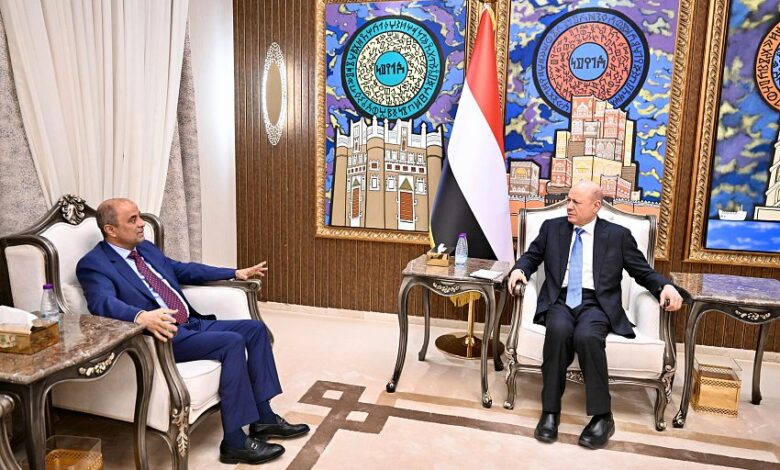
Prime Minister Salem Saleh bin Bureik submitted the government’s resignation today, Thursday, to the Chairman of the Presidential Leadership Council (PLC), Rashad Mohammed al-Alimi. The move is described as a precursor to forming a new government aligned with the political and economic shifts currently taking place in the country.
According to the official Yemeni News Agency, this step aims to strengthen the unity of sovereign decision-making and consolidate a path of partnership and collective responsibility. It also seeks to accelerate comprehensive reforms, combat corruption, and unify national efforts to restore state institutions and end the coup.
During his meeting with bin Bureik, the PLC Chairman praised the government’s performance during the past period, particularly in managing economic and monetary files despite difficult circumstances and a stifling funding crisis. These challenges were exacerbated by Houthi militia attacks on oil facilities as part of an Iran-backed military escalation.
This resignation comes hours after the PLC approved filling vacancies within its membership during a meeting chaired by Rashad al-Alimi and attended by members:
- Sultan al-Aradah
- Tareq Saleh
- Abdulrahman al-Muharrami
- Dr. Abdullah al-Alimi
- Othman Mujali
The Council took several decisions aimed at improving service and administrative performance “to meet the aspirations of citizens and establish a new phase” focused on restoring state institutions.
In early December, military confrontations escalated between Southern Transitional Council (STC) forces on one side and government forces and the Coalition on the other. The STC initially seized the governorates of Hadramawt and Al-Mahrah on the Saudi border before the “Nation’s Shield” (Dir’ al-Watan) forces recaptured both provinces.
Meanwhile, authorities in Abyan, Shabwah, and Lahj welcomed government forces, which are currently taking over the remaining areas in Dhale and Socotra. All these governorates were under STC control prior to the announcement of the STC’s dissolution.