Yemen Monitor/Newsroom:
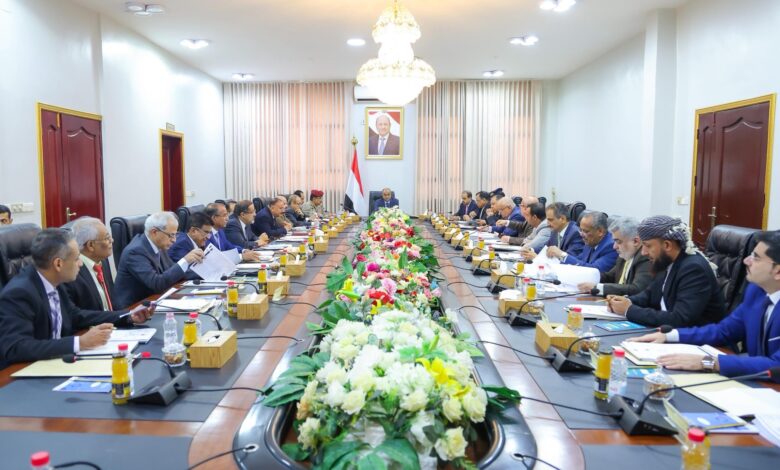
In light of the continuous collapse of the national currency and deteriorating economic conditions, the Yemeni Cabinet, during its regular meeting on Wednesday in the interim capital Aden, chaired by Prime Minister Salem Saleh Bin Brik, discussed urgent measures to curb monetary deterioration and achieve a degree of economic stability. This comes alongside addressing the service challenges that affect citizens’ lives.
The meeting specifically focused on the sharp fluctuations in the Yemeni Rial’s exchange rate, which have negatively impacted the prices of essential goods and services and exacerbated citizens’ suffering, according to the official Yemeni News Agency. The Cabinet emphasized the necessity of taking decisive steps to halt financial bleeding, enhance public revenues and direct them towards essential expenditures, while controlling and rationalizing government spending to ensure a minimum level of monetary and financial stability.
The Cabinet also discussed financial and administrative reform plans and potential measures to fulfill the state’s necessary commitments, primarily paying employee salaries and improving the performance of service sectors, especially the electricity sector, which experiences frequent outages, particularly with the current heatwave in Aden and other governorates.
At the beginning of the session, the Prime Minister stressed that the current phase is critical and sensitive, requiring a different economic response based on a realistic and integrated vision. He called for greater coordination between the government and local authorities to ensure the effective use of resources, linking them to basic citizen needs, especially food security, health services, and electricity.
The Cabinet reviewed a report from the Minister of Oil and Minerals regarding the domestic gas crisis and mechanisms for providing fuel to power stations. It recommended the swift establishment of a strategic reserve of petroleum derivatives to avoid supply crises. In a step aimed at strengthening financial policies, the Cabinet approved the Public Debt Strategy project, which seeks to mobilize local and external financing resources, reduce reliance on inflationary tools, and lower domestic debt to safe levels, thereby helping to finance the deficit without compromising monetary stability.
Alongside the economic file, the Cabinet ratified the framework agreement signed with Saudi Arabia to support and operate health facilities and praised the support provided by the Kingdom to improve the health sector, at a time when the country is suffering from a sharp decline in public services due to the ongoing economic crisis.
In conclusion, the Cabinet stressed that economic challenges require full governmental cooperation, with a focus on achieving monetary and financial stability as an urgent priority in the coming phase. It called on the international community to support the Yemeni government’s efforts to rescue the country’s economy and prevent its slide into complete collapse.