11 Years of Absence… Online Campaign Demands Release of Mohammed Qahtan

Yemen Monitor / Monitoring Unit / Special:
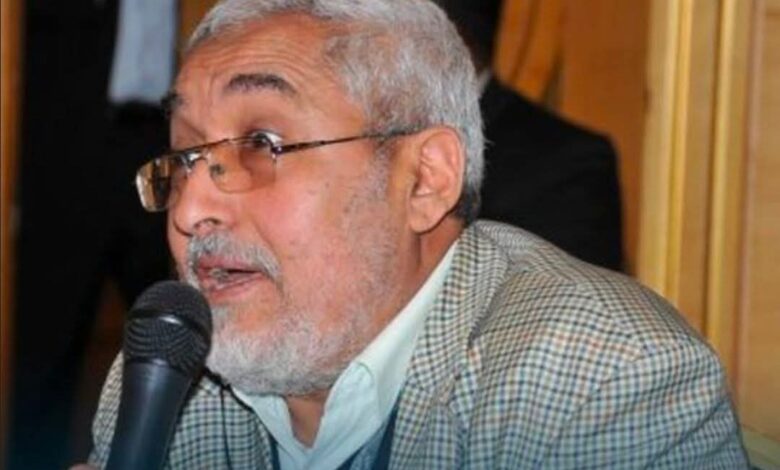
A widespread online campaign was launched on Sunday evening demanding the release of prominent Yemeni politician Mohammed Qahtan, who has been forcibly disappeared in the prisons of the Houthi group for over 11 years, marking one of the longest and most prominent cases of enforced disappearance linked to the conflict in Yemen.
The campaign, which began at 8:00 PM Yemen time under the hashtags “#Freedom_for_Qahtan” and “#Qahtan_11_Years_of_Disappearance,” coincided with the 11th anniversary of his abduction on April 5, 2015, amid escalating local and international calls to reveal his fate and secure his release.
Shocking Numbers: Over 4,000 Days of Absence
According to monitoring data, Qahtan has spent approximately 4,018 days in enforced disappearance as of April 2026, equivalent to nearly 132 months or 574 weeks, without any confirmed information about his place of detention or health condition, and with a complete lack of any communication with his family.
Despite his name being included in international resolutions, most notably UN Security Council Resolution 2216, the succession of UN envoys, and numerous human rights statements, these efforts have not led to any real breakthrough in his case, reflecting the limited impact of international pressure on this file.
Party Appeals and Media Movements
The Yemeni Congregation for Reform (Al-Islah) party had called for participation in a media campaign coinciding with the anniversary, affirming in a statement issued by its Media and Culture Department that Qahtan’s case represents one of the most prominent cases of enforced disappearance since the Houthi coup.
The statement noted the continued “deliberate blackout” by the group and the absence of any legal justification for his detention, while his family’s suffering continues for over a decade.
Government: An Ongoing Crime and a Test for the International Community
In the same context, Minister of Legal Affairs Ahlam Ali Al-Shu’aibi Al-Maqtari described Qahtan’s disappearance as “one of the most heinous enforced disappearance crimes in modern Yemeni history,” pointing out that the disappearance of a prominent political figure who participated in the National Dialogue Conference represents an attack on the path of political consensus.
For his part, Minister of Information Muammar Al-Eryani stated that the case “is no longer just a humanitarian file, but a real test of the credibility of the international community,” considering that his continued detention represents a direct challenge to international resolutions, foremost among them Resolution 2216.
Al-Eryani added that “the continuation of this crime reflects a systematic pattern of enforced disappearance aimed at undermining political life,” calling on the United Nations to adopt a firmer stance and move from managing the crisis to resolving it.
In the same context, Minister of Human Rights Mishal Mohammed Omar affirmed that “the passing of eleven years since the abduction of Mohammed Qahtan represents an ongoing crime of enforced disappearance and a flagrant violation of international humanitarian law and human rights law, especially since he is covered by UN resolutions affirming the need for his release.”
He explained that “his continued detention in unknown circumstances, and his family being denied knowledge of his fate, reflects the scale of human suffering affecting thousands of forcibly disappeared persons, and undermines any efforts to build trust and advance peace paths.”
He stressed the “need for his immediate and unconditional release, revealing his fate, enabling his family to exercise their legal and humanitarian rights, and ending all practices of enforced disappearance against all abducted Yemenis,” affirming that “continued procrastination and obstruction of the implementation of understandings regarding the detainees file is unacceptable.”
Qahtan’s Family: Prolonged Suffering and Deferred Hope
On the humanitarian level, the suffering of Qahtan’s family continues, as they have lived for years in a state of constant anticipation and anxiety. Fatima, the daughter of the abducted politician, said the family has been denied any communication with her father throughout this period, which has compounded their psychological suffering.
She noted that his name being included in prisoner exchange lists under the Muscat agreement at the end of last year renewed hope, but the delay in implementation has raised serious concerns about the deal stalling, especially after months without any tangible progress.
The family called on the Presidency, the government, the international community, and human rights organizations to take serious action and pressure the Houthi group to release him, considering that his continued detention is “unjustified and raises questions about the reasons for stalling this file.”
Enforced Disappearance as a Pressure Card
An analysis of the case’s trajectory reveals that the Houthi group has treated Qahtan’s file as a political bargaining tool rather than a humanitarian or legal issue, as their positions have shifted between denial and contradictory statements, without providing any decisive information about his fate.
Observers believe that the continued disappearance of Qahtan reflects a broader pattern of using the detainees’ file as a pressure card in negotiations, which complicates political settlement efforts and undermines trust between the parties.
Accumulated Failures and Limited Pressure
Despite more than a decade having passed since his abduction, international and UN efforts have failed to impose any actual compliance from the Houthis regarding his case, highlighting a clear gap between international resolutions and their implementation mechanisms.
This file also reveals shortcomings in managing the prisoners and detainees file, both in terms of negotiation and political pressure, in the absence of a unified strategy capable of achieving a real breakthrough.
Between Political Symbolism and a Humanitarian File
Mohammed Qahtan’s case is no longer just an individual incident; it has become a political and humanitarian symbol reflecting the complexities of the conflict in Yemen, embodying the overlap between the human rights and political dimensions of the detainees’ file.
As the case enters its twelfth year, questions are mounting about the effectiveness of current approaches and the possibility of making progress without a fundamental change in pressure mechanisms and international engagement, to ensure an end to one of the longest-running enforced disappearance cases in the country.