Yemen Monitor / Newsroom:
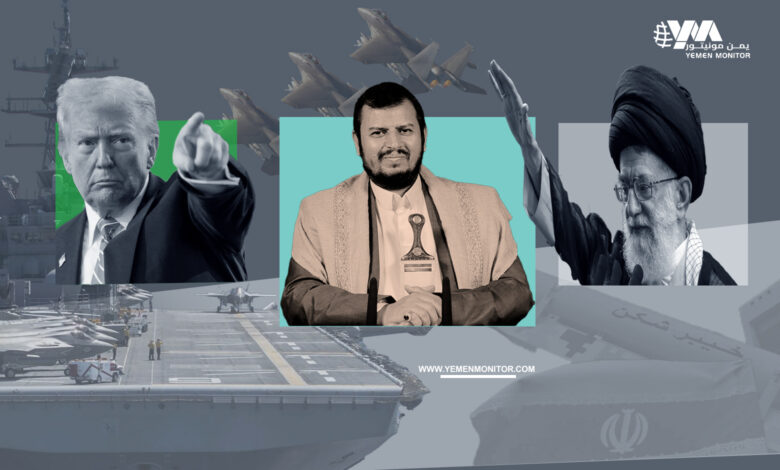
The Houthi group in Yemen is facing a complex political and military dilemma following regional developments that a research report described as a “major geopolitical shift” in the region in late February 2026.
A report issued by the Mokha Center for Strategic Studies stated that the U.S.–Israeli military operation targeting Iran was not limited to striking nuclear facilities, but also included what the report described as a “decapitation strike,” represented by the killing of Iran’s Supreme Leader Ali Khamenei and several senior military commanders. This development directly affected groups linked to Tehran in the region, including the Houthis.
The report explained that this development has placed the group before a complex equation between maintaining its commitment to its alliance with Iran and preserving its authority in Sana’a, amid confusion within regional coordination centers in Tehran.
It noted that the absence of what the report called the traditional “strategic compass” explains the cautious tone that has appeared in recent speeches by the group’s leader Abdul-Malik al-Houthi, as the group recognizes the level of military and intelligence superiority of its adversaries and the potential threat this poses to its existence if it becomes involved in a broad confrontation.
The report also referred to discussions within the group’s leadership between two different factions in assessing the situation; one pushes toward retaliation and targeting US and Israeli interests, while another faction prefers avoiding escalation for fear of losing the gains in territorial control that the group has achieved over the past years.
On the ground, the report noted that the Houthis took precautionary measures during the first days of escalation, including canceling fighters’ leave, reinforcing the front lines, and repositioning some military units in mountainous areas to reduce their exposure to airstrikes.
The report suggested three possible scenarios for the group’s behavior in the coming period. The first is avoiding direct involvement in the conflict in order to preserve power.
The second scenario involves carrying out limited and symbolic operations that reflect support for its allies without sliding into a comprehensive confrontation. The third scenario is full participation in the escalation, including threatening navigation in Bab al-Mandeb Strait, a choice that remains tied to developments in the regional situation and the possibility of receiving direct instructions or the group feeling an existential threat to its leadership.