United Nations: Shackling the Humanitarian Response in Yemen Is Terrifying

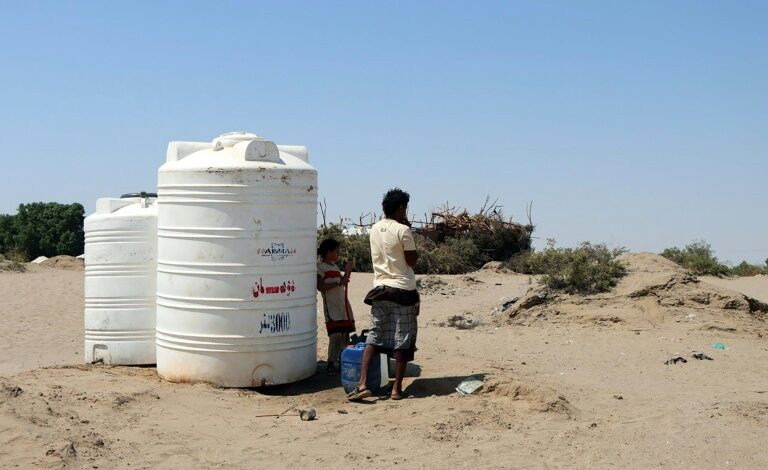
Yemen Monitor / Marib / Special:
The United Nations warned on Monday that the humanitarian crisis in Yemen is heading toward a sharp deterioration in 2026, amid escalating food insecurity and the fading of international aid.
Julian Harneis, the UN Resident Coordinator and Humanitarian Coordinator for Yemen, expressed concern that this catastrophic situation could pass unnoticed by the world until death tolls rise. Speaking to journalists in Geneva, he said the situation in Yemen is “extremely alarming.”
Last year, 19.5 million people in the country required humanitarian assistance, while the UN response plan for Yemen was funded at only 28 percent, amounting to just $688 million.
Harneis said: “We expect things to become much worse in 2026,” noting that 21 million Yemenis are now in urgent need of assistance as aid resources run dry.
Seventy-three UN staff members remain detained in Yemen, some of them since 2021. Harneis lamented: “With these arrests and the seizure of our offices, the United Nations does not have the appropriate conditions to work. Seeing our humanitarian response shackled in this way is terrifying.”
He explained that food insecurity continues to rise, particularly along the Red Sea coast, while the health system—which has been supported by the United Nations and the World Bank over the past ten years—“will not receive support in the way it did in the past.”
He added that Yemenis will be “highly vulnerable to epidemics” this year, continuing: “What I fear is that we will not hear about this situation until mortality and disease rates rise significantly next year.”
Under President Donald Trump’s administration, the United States significantly reduced foreign aid, while other major donor countries have also adopted austerity policies and cut their spending.
Harneis noted that the United States had for many years been the largest donor to Yemen, but “that is no longer the case.” He said: “I hope the U.S. government will return to funding, at least in parts of Yemen,” and also expressed hope that Gulf countries would increase their support.
The UN coordinator warned that “the humanitarian crisis in Yemen poses a risk to the Arabian Peninsula, as diseases such as cholera, measles, and polio are cross-border.” He added that the United Nations is trying to work with non-governmental organizations to fill existing gaps.
Harneis said: “Children are dying… and the situation will get worse,” noting that “over ten years, the United Nations and humanitarian organizations managed to improve mortality and disease rates, but under the conditions we are seeing this year, that will not be the case. This is the stark reality that everyone must understand.”
The Houthis have been fighting a war against the Saudi-led coalition-backed government since 2015, a conflict that has killed hundreds of thousands of Yemenis and caused a major humanitarian crisis.
Harneis said the absence of a solution to the conflict is what fuels these needs, adding: “It is not about active fighting, mass displacement, or bombardment; rather, it is the economic collapse, damage to ports and airports, and the disruption of basic services.”
He concluded: “We can mitigate the crisis and save lives, but we cannot stop the underlying dynamics that generate all these needs.”