Yemen Monitor / Newsroom:
The Executive Office of Marib Governorate (eastern Yemen) confirmed today, Sunday, its full support for the political leadership represented by His Excellency President Dr. Rashad Mohammed Al-Alimi, Chairman of the Presidential Leadership Council and Supreme Commander of the Armed Forces. It endorsed all sovereign decisions, foremost among them the declaration of a state of emergency across the entire territory of the Republic, and the measures aimed at enhancing security and stability and preserving national constants and gains.
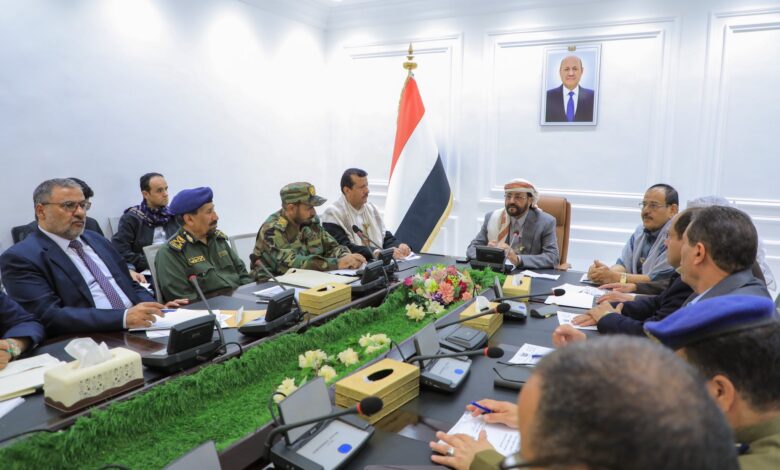
The Executive Office, in a meeting chaired by Presidential Leadership Council member and Governor of Marib Governorate, Major General Sultan Al-Arada, discussed the general situation in the country under the current exceptional circumstances.
Al-Arada emphasized the importance of making this year a new phase of serious and responsible work, and a year distinct in terms of the level of contribution, quality of performance, and job discipline. This should positively reflect on improving services provided to citizens and enhancing the development trajectory in the governorate.
Al-Arada stressed the necessity of expediting the completion of annual performance reports for the executive offices and preparing annual plans and budgets. He affirmed that these reports and plans represent essential tools for performance evaluation, identifying areas of deficiency and strengths and weaknesses, and building on achieved successes, which contributes to developing institutional work and raising administrative efficiency.
The Presidential Leadership Council member called for unifying efforts, working in a team spirit, and enhancing institutional coordination and integration among the executive offices. This would help raise the level of overall performance and achieve an effective response to the requirements of the current phase and confront service and development challenges.
Major General Al-Arada pointed out the magnitude of national responsibilities entrusted to local authority leaders and the Executive Office in Marib Governorate, and their pivotal role in strengthening the state’s presence and the effectiveness of its institutions, maintaining stability, boosting citizens’ confidence in official institutions, and meeting their needs in various aspects.
He also emphasized the importance of activating follow-up and evaluation mechanisms to ensure optimal resource utilization, correcting the course of work, and achieving the developmental and service goals of the governorate.