Yemen Monitor / Newsroom:
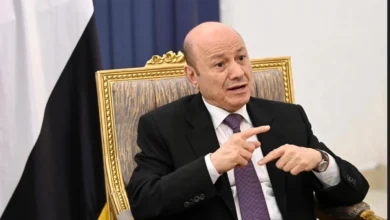
The Presidential Leadership Council (PLC), in its meeting held today, Tuesday, chaired by Dr. Rashad Mohammed Al-Alimi, President of the Council, renewed its full support for the Government and the Central Bank in continuing to implement economic reforms.
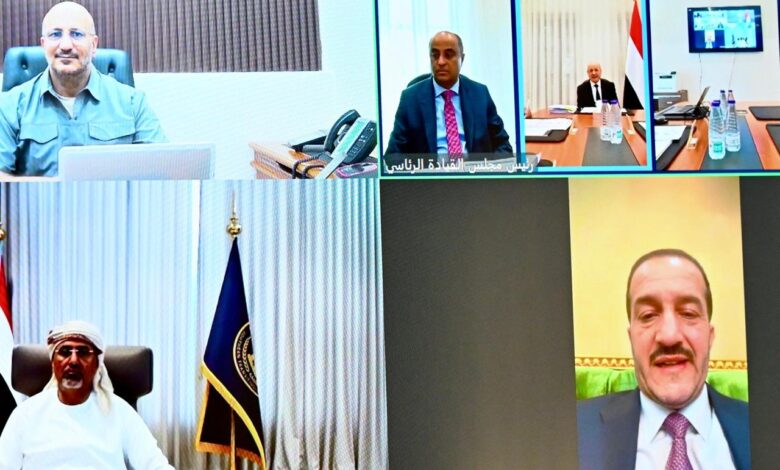
During the meeting, which included all members and the presence of the Prime Minister, the Council discussed the latest developments in the economic and security situation, and the reports submitted by the Government and specialized committees regarding a number of national issues on its agenda, according to the official news agency.
The meeting listened to a government report from Prime Minister Salem Saleh Bin Breik on the level of implementation of PLC Decision No. (10) for 2025, which concerns economic and pricing reforms, and the required procedures to enhance the efficiency of public resource management, control spending, improve the level of services, and reduce the burden of the humanitarian crisis created by the Iranian-backed Houthi terrorist militias.
The Council stressed the need to redouble efforts aimed at achieving financial and monetary stability, and adhering to standards of transparency and accountability, which will contribute to the regular payment of state employee salaries, improving public services, and enhancing confidence with the donor community.
In this context, the Presidential Leadership Council highly appreciated the continuous fraternal support from the brothers in the Kingdom of Saudi Arabia and the United Arab Emirates, especially the recent agreements signed with the Government through the Saudi Program for the Development and Reconstruction of Yemen (SDRPY) to support the general budget, provide petroleum derivatives for the operation of power stations, and enhance the institutional capacities of the Ministry of Interior.
The Council considered these sincere positions by the brothers in the Coalition to Support Legitimacy to be an extension of their leading role in assisting the Yemeni people, its national economy, and consolidating the foundations of security, stability, and development in the country.
The Council also discussed the latest developments in a number of governorates and took actions and recommendations concerning them aimed at raising the efficiency of institutional performance, integrating efforts between central state agencies and local authorities, and mobilizing all energies and resources to serve the citizens and achieve their aspirations for the restoration of state institutions, security, stability, and peace.