Head of Prisoners’ Committee: Qahatan Is Our Top Priority… Houthis Blocking a Solution

Yemen Monitor – Marib | By Abdullah Al-Attar
Hadi Al-Haij, head of the government delegation to the Committee on Prisoners, Abductees, and the Forcibly Disappeared, affirmed that Yemen’s internationally recognized government attaches the highest priority to the prisoners’ file in its negotiations with the Houthis.
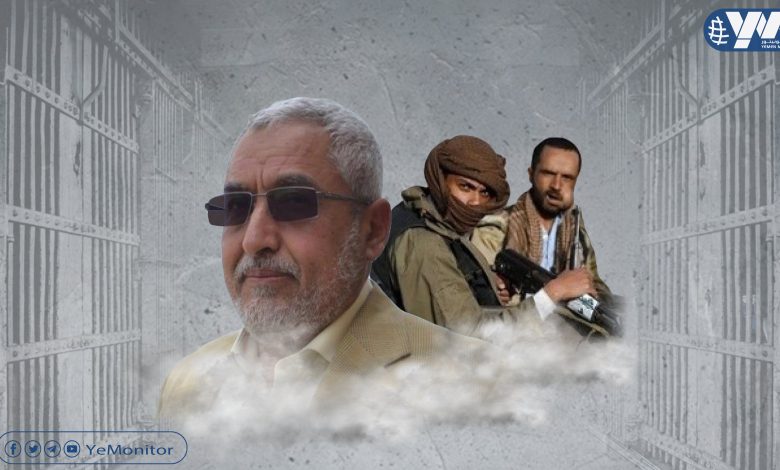
In an exclusive statement to Yemen Monitor, Al-Haij stressed that government efforts are ongoing to secure the release of thousands of detainees, foremost among them political leader Mohammed Qahatan.
He rejected suggestions that the government committee has been lax in pursuing the issue, holding the Houthis fully responsible for stalled talks due to what he described as “deliberate stalling and evasiveness” and their refusal to respect past agreements.
“We are working continuously and remain committed to ending the suffering of prisoners and their families,” Al-Haij said. “But the other side treats the file as a tool of political blackmail, not as a humanitarian issue.”
He noted that the government has made several concessions to move the process forward, but “Houthi intransigence” continues to block a comprehensive and fair agreement that would ensure the release of all detainees under the “all-for-all” principle enshrined in previous UN-brokered agreements.
The prisoner exchange issue between Yemen’s internationally recognized government and the Houthis remains one of the most pressing humanitarian files in the country’s long-running conflict. Negotiations have been sporadic and largely dependent on regional and international mediation.
In recent months, indirect talks were held in Amman, Jordan, under the auspices of the United Nations and the International Committee of the Red Cross. The aim was to reach a comprehensive deal to exchange all prisoners and detainees based on the “all-for-all” formula.
However, those rounds ended without tangible results. According to the government, this was due to Houthi intransigence and their refusal to release prominent political and military figures—chief among them Mohammed Qahatan, who has been held by the group for more than eight years.