Yemen Monitor/Newsroom:
Yemeni Prime Minister Salem Saleh bin Breik affirmed that the government is moving forward with comprehensive economic, financial, and administrative reforms in coordination with the Presidential Leadership Council and the Central Bank. The goal is to sustain exchange rate stability and increase the efficiency of state institutions in oversight and combating corruption.
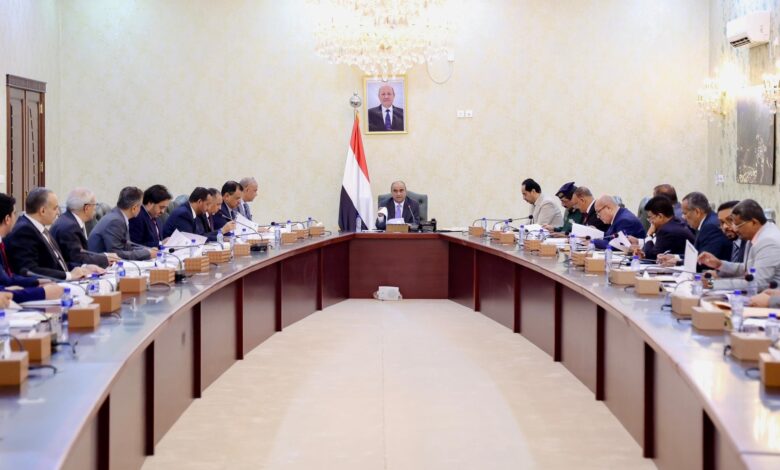
During a cabinet meeting in the interim capital of Aden, Bin Breik stressed that the improvement of the national currency’s exchange rate “is not just an economic figure; it must be immediately translated into a tangible decrease in the prices of goods and services.” He warned against any monopolistic practices or manipulation that harms citizens, vowing to show no leniency toward any entity or individual who attempts to circumvent government decisions for illegal gains.
The council discussed measures for market oversight and price control, emphasizing that field campaigns are aimed at protecting consumers and ensuring that goods are sold at fair prices, not targeting the private sector. They also stressed that local authorities must enforce the decision to prohibit the use of foreign currencies instead of the national currency.
The Prime Minister also called for the decrease in fuel prices to be reflected in the costs of transportation, agricultural products, and fish. He urged a reduction in fees for private schools, universities, and hospitals, along with intensified oversight of medicine prices.
The council praised the support of the Coalition to Restore Legitimacy, led by Saudi Arabia and the UAE, and called for urgent assistance to maintain exchange rate stability. It also ratified Yemen’s accession to the Biodiversity Beyond National Jurisdiction (BBNJ) agreement and approved a draft resolution to regulate industrial fishing in the exclusive economic zone.
The council welcomed the briefing by UN Envoy Hans Grundberg to the Security Council, which revealed the Houthis’ involvement in military and economic escalation, and called on the international community to take deterrent measures.
It also renewed the government’s commitment to the option of a just peace and strongly condemned the Israeli occupation’s decision to occupy the Gaza Strip, considering it a blatant act of aggression that threatens regional and international peace and security.