Yemen Monitor / Newsroom:
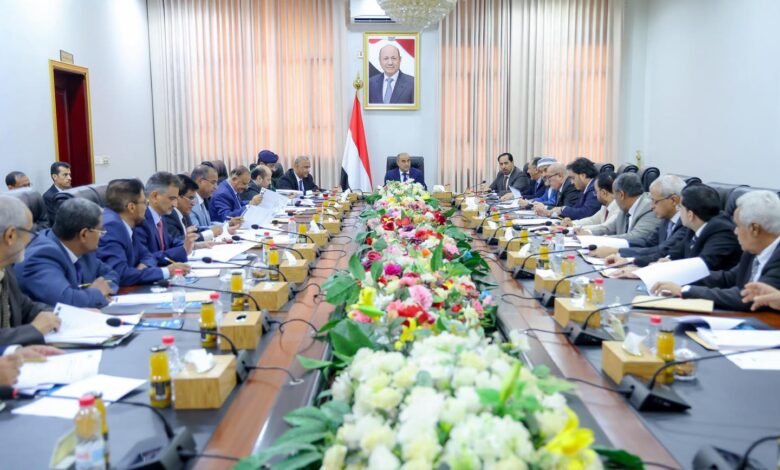
The Yemeni Cabinet held its regular meeting on Wednesday in the interim capital Aden, chaired by Prime Minister Salem bin Bureik, to discuss economic and service-related challenges and ways to translate recent currency improvements into tangible benefits for citizens.
The Cabinet emphasized that the recent appreciation of the Yemeni rial reflects the integration of monetary and fiscal policies recently adopted by the government. It called on all ministries and institutions to capitalize on this progress by curbing price inflation, regulating markets, and fighting monopolies and speculation.
“The improvement in the national currency’s exchange rate is not just an economic figure,” the Cabinet stated, “but a government commitment to ensure its direct impact on the prices of goods and services.”
In this context, the Prime Minister described the economic war waged by the Houthi group—through repeated attacks on oil infrastructure and restrictions on the circulation of the national currency—as a strategic challenge no less serious than the military conflict. He stressed that winning this economic battle is integral to restoring the state.
The Prime Minister directed local authorities to carry out intensive market monitoring campaigns to ensure that the prices of essential goods decline in line with the exchange rate improvement, while also regulating profit margins and combating all forms of commercial manipulation.
The Cabinet also reiterated the exclusive use of the Yemeni rial in all commercial and real estate transactions, as a measure to strengthen monetary sovereignty, and called on the Central Bank to continue its oversight role over the banking sector and reinforce efforts to regulate the currency market.
The Cabinet praised the efforts of the Ministry of Industry and Trade and its inspection teams, particularly in Aden and other liberated provinces, stressing the importance of continued coordination among all entities to protect consumers and achieve greater economic stability.