Yemen Monitor/Newsroom:
A report issued by the United Nations Food and Agriculture Organization (FAO) revealed a continued deterioration of the food security situation in Yemen over the next four months.
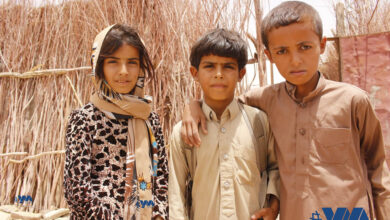
The report indicated that over a quarter of internally displaced persons (IDPs) in four government-controlled areas of Yemen—Aden, Lahj, Marib, and Taiz—experienced moderate to severe hunger in April 2025. It clarified that 25.3% of these IDPs suffered from moderate to severe levels of hunger, as shown by the Household Hunger Scale.
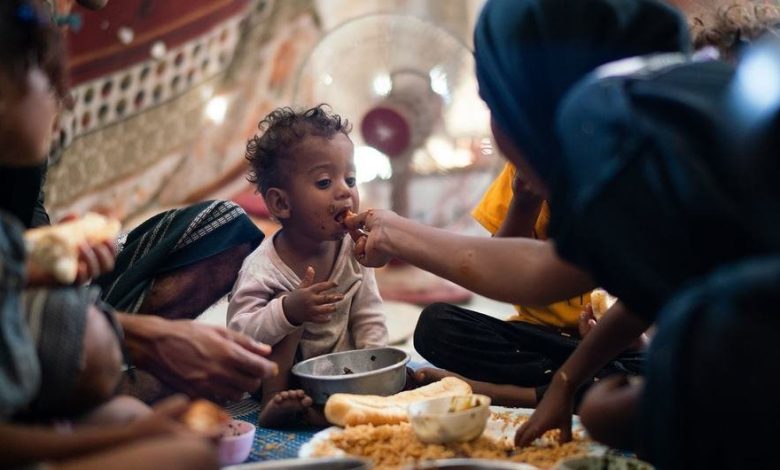
The prevalence of food insecurity slightly worsened compared to March levels and is expected to deteriorate further among IDPs until September, with the beginning of the lean season in May. The FAO reported that approximately 47% of households in the four governorates suffer from insufficient food consumption, with 34% consuming fewer than four food groups. It added that 17.3% of IDP households experience severe food deprivation.
The report also showed that IDPs residing in camps face higher rates of severe food deprivation compared to those living in host communities. It noted that households relying on natural resources, temporary work, or social welfare are among the most affected by food insecurity.
Around 72% of IDP households were impacted by various economic shocks, affecting their ability to access food, with about 58% experiencing a decrease in income over the past month. Approximately 20% of households resorted to food-based coping strategies, while 66% turned to crisis coping strategies and 10% to emergency coping mechanisms.
Regarding food consumption, the report showed relative stability in the prevalence of inadequate consumption among IDPs, with a slight increase from 46.7% to 47.3%. The situation in camps significantly worsened, with the rate rising from 42.8% to 53.6%, while it slightly improved among IDPs in host communities, where the rate decreased from 47.5% to 46.1%.
The report highlighted the increasing disparity in food security between IDPs in camps and those living in host communities. It also pointed to a slight increase in the percentage of individuals facing immediate food insecurity, with 36% of IDPs in camps and 29% of those in host communities affected.