Human Rights Committee Urges Yemeni Leadership to Improve Living Conditions and Respond to Women’s Demands

Yemen Monitor/Newsroom:
Shafiqa Saeed, Head of the National Women’s Committee, has called upon Rashad Al-Alimi, President of the Presidential Leadership Council, its members, and the Prime Minister, to urgently respond to the demands of Yemeni women for improved deteriorating living conditions across the country.
In an official memo, the Committee emphasized that this appeal is based on the Prophet’s saying, “Each of you is a shepherd and each of you is responsible for his people,” and on the Presidential Leadership Council President’s speech marking the 35th anniversary of the Republic of Yemen, which underscored the critical role of women in various stages of the national struggle.
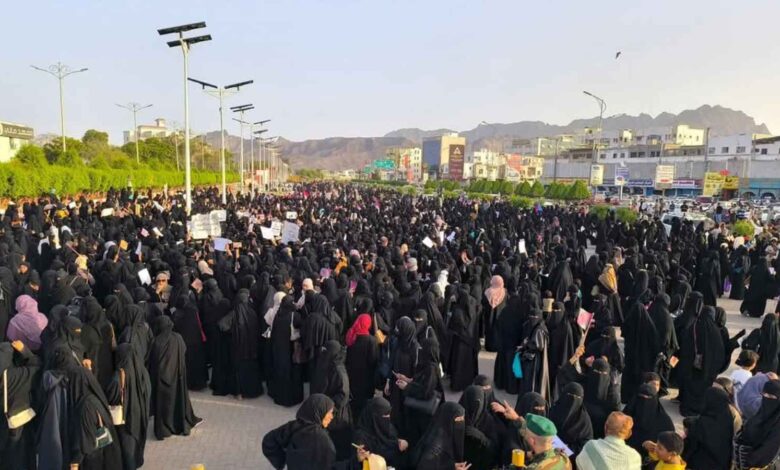
Dr. Shafiqa noted that Yemeni women have recently held peaceful protests in the governorates of Aden, Taiz, Lahj, and Abyan to express their daily suffering due to the shortage of basic services such as water, electricity, healthcare, and education, in addition to the rising cost of living and the lack of economic and social support.
The Committee affirmed that Yemeni women’s participation in these protests is a “legitimate right guaranteed by the constitution and the country’s laws and legislation,” rejecting the repression targeting peaceful female protestors expressing their rights.
Dr. Shafiqa stressed that these protests are not for personal gain or demands for leadership positions, but rather to demand something more fundamental: “a dignified livelihood for them and all citizens.” These demands include providing life’s necessities, regular payment of state employee salaries, curbing currency depreciation, and ensuring security for citizens.
The Committee demanded the accountability and dismissal of corrupt officials from their positions of power and those who exploit their public offices to plunder the people’s sustenance.
The Head of the Committee emphasized that meeting these just demands is the “true guarantee for restoring the state, consolidating security, and achieving national independence.” She considered responding to these demands not merely a constitutional duty, but an “ethical and historical responsibility that reflects the spirit of just leadership and empathy for citizens’ suffering.”
The Committee expressed its full support for the peaceful protests by women in various governorates demanding basic services and livelihoods. It appealed to the Presidential Leadership Council and the Prime Minister to direct relevant authorities to swiftly respond to these demands and adopt tangible, comprehensive solutions that end the suffering of women and all segments of society, supporting the stability of the entire community to live with dignity and justice, thereby restoring hope and trust among women and their families.