Rights Center: Landmines Represent a Parallel Infrastructure of Violence in Yemen

Yemen Monitor / Newsroom:
The American Center for Justice (ACJ) said on Saturday that landmine networks in Yemen constitute a “parallel infrastructure of violence” that continues to claim lives and destroy livelihoods, independently of the military context that produced them.
This came in a statement issued by the center on the occasion of the International Day for Mine Awareness, observed on April 4 each year.
The center explained that its human rights report titled “The Blind Killer” documented what it described as a “methodical approach to planting random death” across Yemeni territory, noting that estimates based on monitoring operations indicate more than 15,000 civilian victims.
It added that about 80 percent of the victims suffer from permanent disabilities and physical deformities due to the use of fragmented and camouflaged explosive devices that blend with the natural environment.
The center held the Houthi militia fully responsible for planting anti-personnel and anti-vehicle mines, as well as camouflaged explosive devices during the ongoing conflict.
It stressed that the failure of armed groups to sign international agreements does not exempt them from criminal responsibility, noting that customary international humanitarian law imposes obligations that prohibit the use of indiscriminate weapons and targeting civilians, and subjects those responsible to accountability under universal jurisdiction.
The center pointed out that landmines lose any connection to the principle of military necessity and operate with “blind automation,” killing civilians who pose no threat.
It noted that these practices became especially evident during the truce in mid-2022, when thousands of displaced people returned to their areas only to encounter minefields planted before the withdrawal of Houthi forces, resulting in significant human and material losses and hindering the restoration of normal life.
The center also warned of additional risks resulting from the continued closure of main roads, especially the Sana’a–Marib road, which forces travelers to take alternative desert routes through Al-Jawf governorate.
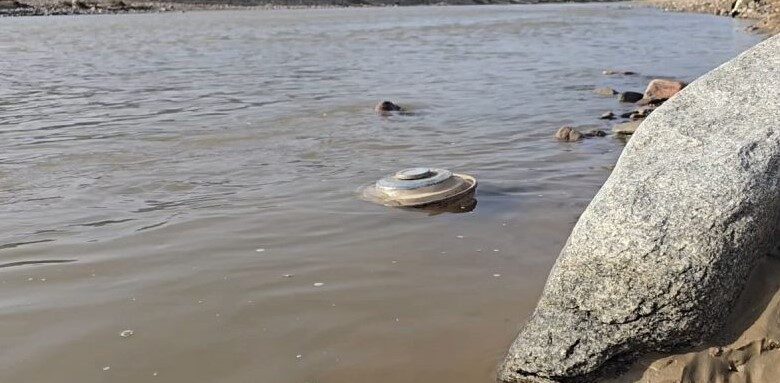
It explained that floods and climate changes contribute to moving and burying mines under sand, turning them into “mobile traps” that threaten passersby and expand the scope of danger.
The center called on the international community and peace sponsors to require the handover of mine maps as a prerequisite for any political or security negotiations, and not to sideline this issue.
It also urged the Houthi militia to immediately stop planting mines, hand over maps of their locations, and assume criminal and material responsibility for violations against civilians.
The center called on the Yemeni government to intensify efforts to provide sustainable medical and psychological care for victims and to integrate the injured into long-term support programs.
It further urged international human rights organizations to prepare litigation files based on the principle of universal jurisdiction to prosecute those involved.
In this context, the center expressed its appreciation for the efforts of the Saudi “Masam” project in clearing Yemeni land of mines, praising the sacrifices of field teams working to dismantle them and protect civilian lives.