Yemen Monitor / Marib / Exclusive:
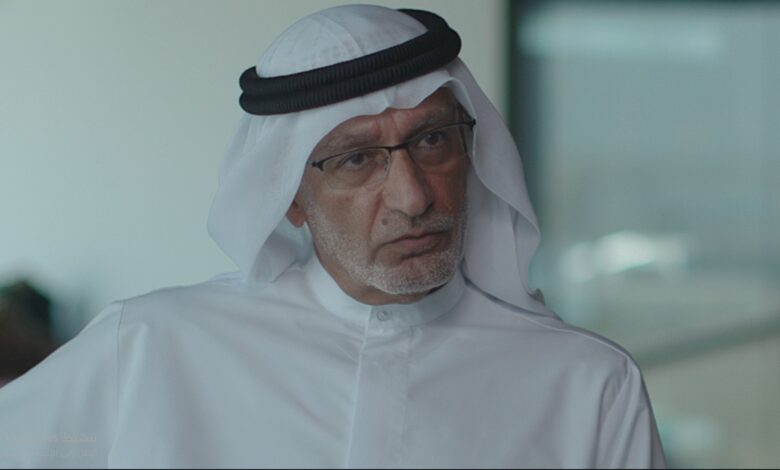
In a media escalation reflecting the peak of the strategic rift between the two pillars of the Coalition, Emirati academic Abdulkhaleq Abdullah, who is close to decision-making circles in Abu Dhabi, launched a sharp attack on Saudi policy toward his country. He described Riyadh’s accusations that Abu Dhabi threatens its national security as “delusion and a false claim,” reminding the Kingdom that his country provided a “free service” to protect Saudi cities from Houthi missiles.
In an article for the Lebanese newspaper An-Nahar, Abdullah considered Saudi skepticism regarding Emirati intentions toward regional security as “absurdity” that ignores Emirati sacrifices.
Abdullah issued a provocative statement, asking: “What would have happened if the UAE had left Saudi Arabia alone in the Yemen war while Houthi missiles on its borders targeted its cities?” He explicitly accused Riyadh of being detached from reality and “claiming a delusion” in its assessment of the Emirati role.
Abdulkhaleq Abdullah stated: “In the 2015 Yemen war, the UAE answered the call to defend the Kingdom’s southern borders. During the Arab Spring phase, the UAE led the battle to confront the forces of terrorism and chaos across the Arab world. No one but an ingrate can deny that.”
He claimed that the UAE stood “alongside Saudi Arabia at more than one pivotal juncture. During the 1991 Gulf War, the UAE stood in defense of Saudi Arabia’s northern borders. In 2011, the UAE was the first to support Bahrain’s security and stability and defend Saudi Arabia’s eastern borders.”
In a notable shift in terminology, Abdullah claimed that the UAE contributed, alongside those he described as “heroes of the Arab South” (referring to the Southern Transitional Council), to liberating 80% of Yemen’s territory. He argued that securing Saudi Arabia’s southern borders represents a “free service” provided by Abu Dhabi to maintain Saudi and Gulf security.
The Emirati academic warned that the alternative to the Emirati role would have been a “catastrophic scenario” involving the South falling under Houthi control or becoming a haven for terrorist organizations. He presented this as a definitive response to Riyadh’s concerns regarding UAE-backed military movements in the eastern provinces.
In December, Riyadh described Emirati pressure on the “Southern Transitional Council” to conduct military movements in Hadramawt and Al-Mahrah as a “threat to the Kingdom’s national security” and to the security and stability of Yemen and the region.
Abdullah rejected this description entirely, asserting that the security of both countries is one and that accusing the UAE of working to destabilize Saudi Arabia “is not based on logic and derives no legitimacy from facts.”
He added: “No sane person can believe that the UAE, which stood side-by-side with Saudi Arabia in more than one crisis, seeks to undermine Saudi Arabia’s security and stability.”
The use of phrases like “claiming a delusion” is rare between Gulf allies, indicating that political understandings regarding Yemeni file have reached a dead end, as the UAE continues to host leaders of the (dissolved) Southern Transitional Council.
The background of the escalating Saudi-Emirati disputes in Yemen turned into a direct public clash between late 2025 and early 2026. In December 2025, Riyadh officially accused Abu Dhabi of threatening its national security by supporting military movements of the Southern Transitional Council in areas the Kingdom considers a sensitive strategic depth. The crisis worsened when the Yemeni government and Saudi Arabia demanded the withdrawal of Emirati forces from Yemen within 24 hours following the detection of unauthorized weapon shipments at the Port of Mukalla. Subsequently, leaders of the Transitional Council dissolved the council during a meeting in Riyadh.