Media Spin or Political Reality? … Al-Zubaidi’s Written Statements Fail to Convince the Southern Street
By: Ameed Al-Mahyobi

Yemen Monitor/Special Writings:
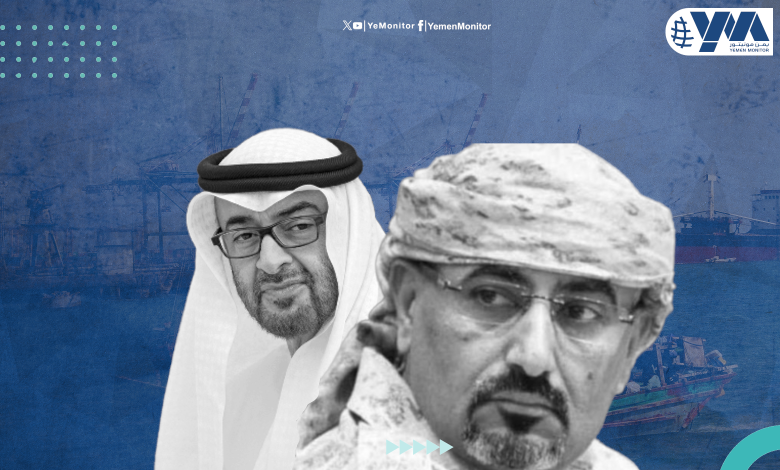
After declaring his rebellion against the internationally recognized government, Southern Transitional Council (STC) president Aidarus al-Zubaidi entered a phase of political absence, raising widespread questions about his future and that of the project he led with regional backing—one that has since become among the most complex issues in Yemen’s political landscape.
Al-Zubaidi rose to political prominence after being dismissed as governor of Aden in 2017, after which he founded the Southern Transitional Council (STC) as an entity advocating the restoration of a southern state. The council relied on Emirati political and military support, including the formation of security and military forces outside official state institutions.
In 2019, Al-Zubaidi led an armed uprising in Aden against presidential guard forces with Emirati air support, resulting in dozens of casualties and the destruction of military and medical equipment, in one of the bloodiest urban confrontations in Yemen.
Although he was appointed Vice Chairman of the Presidential Leadership Council in 2022 as part of efforts to contain his influence, dual power structures persisted. Tensions escalated further when he launched a large-scale military operation in the eastern governorates in late 2025, triggering regional concern and prompting the presidential leadership to take decisive political and military measures, followed by a Saudi call for a Southern-Southern dialogue conference.
Despite announcing participation, Al-Zubaidi left Aden for the United Arab Emirates and has not made any visible public appearance since last January, limiting himself to written statements on his Facebook page. This absence has fueled debate among the public and political circles about its meaning and timing.
Repercussions of Al-Zubaidi’s Disappearance
Political writer Abdulqader Al-Junaid believes Al-Zubaidi’s disappearance reflects a deepening dilemma for a man who “rose to a very high political ceiling,” making retreat difficult without major symbolic and moral losses. He noted that any appearance from outside Yemen—especially from the UAE—could weaken his image and expose him to criticism from opponents.
Al-Junaid told Yemen Monitor that Al-Zubaidi’s real weight lies in his base in Al-Dhalea governorate, which accumulated military and organizational influence over recent years with regional backing. However, this influence now faces both internal and external challenges, particularly after recent military developments that affected his political standing and strained ties with his social base.
According to Al-Junaid, his absence has created a leadership vacuum and confusion in the southern street regarding the future of the southern cause. Meanwhile, regional actors—especially Saudi Arabia—are attempting to recalibrate the situation through political tools such as the Southern-Southern dialogue, aiming to reduce military dominance and redirect the conflict toward political channels.
He also suggested that the UAE’s reluctance to allow Al-Zubaidi media appearances may be tied to calculations about managing his image and timing a potential return in a way that preserves influence without direct losses. He added that Al-Zubaidi’s popularity no longer carries the same momentum and is now driven more by financial and organizational backing than by independent popular support.
Security-Driven Absence
The mystery surrounding al-Zubaidi has opened the door to various interpretations: a regional reshuffling of cards, holding him accountable for security failures, or even discarding him for more controllable alternatives.
Southern activist and writer Nasser al-Mashare’ told Yemen Monitor that al-Zubaidi’s absence is governed by security and political considerations. This comes amid reports of Saudi pressure and pursuit following events in Hadramawt and the STC’s withdrawal from Aden, coupled with military strikes and Saudi drone flights in several southern regions.
Al-Mashare’ argued that describing al-Zubaidi’s role as “absent” may be inaccurate, noting he can still mobilize his base, as seen in large crowds in various provinces and Socotra. He attributed the reliance on written statements to security motives and a desire to avoid escalation with Saudi Arabia, as a direct speech might force al-Zubaidi into escalatory positions that could close regional communication channels.
He added that the ambiguity surrounding Al-Zubaidi’s situation—and reports of Saudi pressure to sideline him—has paradoxically enhanced his symbolic status among supporters, who remain loyal and unconcerned about his absence due to the entrenched nature of the southern cause.
Al-Mashare’ also said there is no strong public pressure to reveal his whereabouts, partly because some believe he may still be inside the country and that his temporary absence could benefit the Southern-Southern dialogue and improve prospects for the southern cause in any future political settlement.
Calls to Reveal His Fate
The first attributed appearance of Al-Zubaidi since January 2026 came via an audio call broadcast during a meeting of one of his allied tribes on February 12. However, the recording did little to resolve speculation about his fate.
Among the skeptics was southern political figure Khaled Salman, who wrote on Facebook that the audio clip failed to answer key questions about the circumstances of Al-Zubaidi’s absence.
Salman noted that editing technology can assemble phrases from previous speeches and repackage them, pointing out that the recording lacked references to current political developments—such as government changes or the nature of relations with Saudi Arabia—that could confirm its authenticity or recency.
In another post on the eve of the 15th anniversary of the February 11 revolution, Salman commented on a political statement issued in Al-Zubaidi’s name, saying: “The street does not need statements from media kitchens, but an appearance with his voice and image,” arguing that proving political presence requires direct engagement with current realities.
He warned that continued ambiguity will keep Al-Zubaidi surrounded by speculation—whether house arrest, detention, or otherwise—questioning why a direct video message has not been released to settle the matter.