“No Settlement, No Resolution”… Houthi Leader Opens Door to Regional Escalation to “Restore Geographical Depth in the Arabian Peninsula”

Yemen Monitor/ Sana’a/ Exclusive:
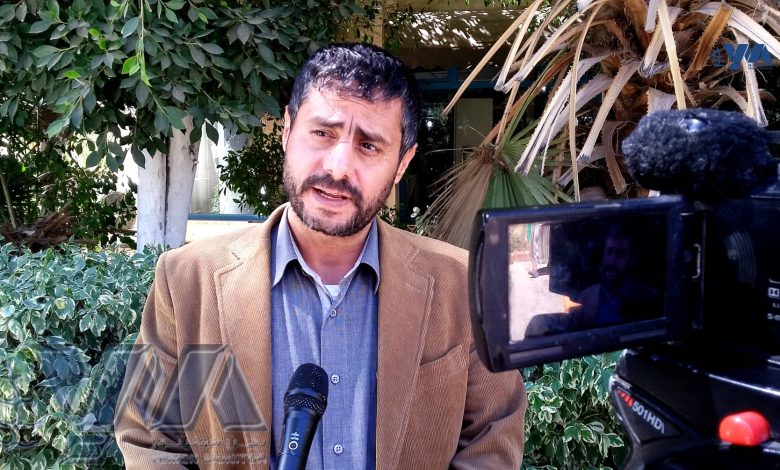
In a notable escalation of political rhetoric, Mohammed al-Bukhaiti, a leader in the Houthi group and member of its political bureau, affirmed that the “revolutionary option” has become the “best and most suitable” path for a solution in Yemen, thereby ruling out the possibility of reaching a settlement through “political agreements or military resolution.”
In an article published on his official account on the platform “X,” al-Bukhaiti stated that “the revolutionary option, based on the awakening of the Yemeni people from Saada to Al-Mahra to participate in liberating the homeland, seizing its rights, and restoring its geographical and demographic depth in the Arabian Peninsula, is the best and most suitable option.”
Al-Bukhaiti describes the group’s local opponents as having “lost the ability to make decisions,” “no longer having real areas of control,” “living in an imaginary world,” and “lacking the language of logic,” making reaching a solution with them “impossible.”
The article confirms that the Houthis will not negotiate with the internationally recognized government “because they have lost the internal battle, and their allies (Saudi Arabia and the UAE) have failed to achieve the goals of the regional and international battle.”
Al-Bukhaiti views the conflict as no longer an internal power struggle but a “regional and international conflict” aimed at “keeping Yemen under external guardianship” led by the US.
Al-Bukhaiti also linked this direction to “the facts and new equations revealed by the Battle of Al-Aqsa Flood,” using the Houthis’ resilience in supporting Gaza as evidence of the correctness of their path and as proof that Yemen will become “qualified to play an active regional and international role.”
He claimed that this conflict was internally resolved in favor of the Houthis after 2014, and that external intervention is what disrupted the establishment of a stable political process at that time.
Despite actual control over the capital, Sana’a, and densely populated provinces in northern Yemen, the Houthis still face the challenge of widespread international recognition and legitimacy, which remains bound by UN Security Council resolutions and the Gulf Initiative, which they explicitly reject in the article.
Al-Bukhaiti did not provide an explanation for his remarks about “restoring geographical and demographic depth in the Arabian Peninsula,” which could be understood as a clear indication of the group’s intention to expand its influence or military operations beyond Yemen’s internationally recognized borders, particularly towards Saudi territory.
For weeks—escalating after the Trump plan and Hamas’s announcement of partial agreement—the Houthis have begun adopting rhetoric reflecting a shift from focusing on the internal Yemeni situation to embracing a regional narrative, linking the local conflict to confronting “external guardianship,” which the West, especially the US, Britain, and Israel, is accused of.
The bloody conflict, which has been ongoing for ten years between the internationally recognized government and the Houthis allied with Iran, has destroyed the Yemeni economy, forced 80% of the population to rely on aid, pushed millions into the clutches of hunger, and caused the world’s worst humanitarian crisis according to the UN.
The war in Yemen escalated since 2014 when the Houthis took control of Sana’a and most of the country’s provinces, forcing the internationally recognized Yemeni government to flee the capital. In March 2015, a coalition led by Saudi Arabia was formed to support the legitimate government, launching airstrikes on Houthi-controlled areas. In response, the Houthis launched missiles and drones at the Kingdom of Saudi Arabia and then the United Arab Emirates until a truce in April 2022 for six months. Although it was not renewed, it persisted despite fragility on the front lines.