408 Yemenis Displaced in One Week, with Shabwah and Ma’rib as Top Destinations

Yemen Monitor / Ma’rib / Special Report:
A recent report by the International Organization for Migration (IOM) reveals that at least 408 Yemenis (68 families) were forcibly displaced from their homes in a single week, from September 14 to 20, 2025. The majority sought refuge in the governorates of Ma’rib and Shabwah.
These figures highlight how the ongoing conflict and Houthi oppression in areas under their control continue to drive new waves of displacement, even in regions that were once considered more stable. The continuous influx of displaced people into Ma’rib indicates that it remains a last resort for many, putting immense pressure on the governorate’s infrastructure and humanitarian services.
This report is part of the IOM’s Displacement Tracking Matrix (DTM), specifically its Rapid Displacement Tracking (RDT) system. The system’s purpose is to monitor and document daily displacement cases, providing accurate data on the numbers, geographical distribution, and humanitarian needs of displaced individuals.
Key Displacement Trends
Shabwah topped the list of governorates receiving displaced people during the period. It took in 30 families (approximately 180 individuals), all of whom were internally displaced within the governorate itself. Displacement was particularly concentrated in the districts of Mayfa’ah (19 families) and Jardan (11 families). This reflects the security tensions in some districts of the governorate, which have previously seen tribal and security-related conflicts leading to similar waves of displacement.
In contrast, Ma’rib received 22 families (132 individuals), most of whom were displaced from the governorates of Ibb and Ma’rib itself, concentrating in the districts of Ma’rib and Ma’rib City. Ma’rib is known as one of the largest reception centers for displaced people in Yemen due to its relative stability and proximity to front lines.
The governorate of Al Hudaidah also saw the displacement of 15 families (90 individuals) to the districts of Hais and Al Khawkhah, with all cases being internal displacement. Al Hudaydah continues to record recurring displacement due to sporadic clashes, despite the relative calm on its fronts.
IOM data shows that the majority of those displaced over the past week came from the following governorates:
- Shabwah: 30 families from the Mayfa’ah and Jardan districts.
- Al Hudaidah: 18 families from the Hais, Al Tuhayta, and Al Mina districts.
- Ibb: 10 families from the districts of Far Al Udayn, Ibb, and Al Qafri.
The ongoing internal displacement in governorates like Shabwah and Al Hudaidah confirms that security threats are not limited to the main battlefronts but also extend to sub-conflicts and scattered acts of violence. The flow of displaced people to Ma’rib continues to indicate that it is a last resort for many, placing tremendous strain on the governorate’s infrastructure and humanitarian services.
Broader Humanitarian Crisis
According to the IOM, the cumulative number of families displaced at least once from January 1, 2025, to September 20 of the same year reached 2,275 families, or 13,650 individuals. This significant figure highlights the scale of the ongoing humanitarian crisis in Yemen, of which displacement is one of the most prominent consequences.
The organization added another 21 families displaced in the week prior to the report (September 7-13) in the governorates of Al Hudaidah, Ma’rib, and Taiz, confirming that the numbers are continuously increasing and the crisis continues to worsen.
The displacement figures released by the IOM are a precise indicator of the fragile security situation in Yemen, where conflict dynamics continue to push more people to the brink of despair. Despite cease-fire efforts and political initiatives, the reality on the ground still sees forced population movement, directly affecting civilians.
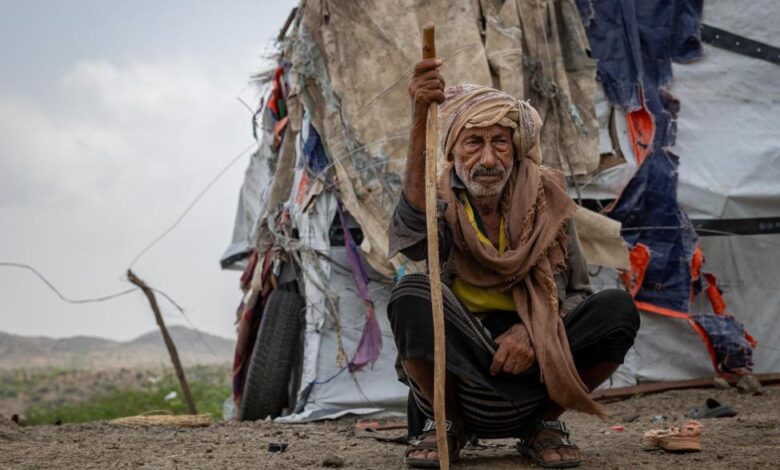
An estimated 4.8 million people remain displaced across Yemen, with many living in temporary shelters that offer minimal protection from harsh weather conditions or access to basic services. Women and children are among the most affected groups, facing increased risks of violence, malnutrition, and deteriorating health conditions. At the same time, floods, droughts, and other extreme weather events exacerbate an already tragic situation.