Yemen Monitor / Aden / Exclusive:
New documents from the organization “Conflict Armament Research” (CAR) have revealed that the Houthis continue to rely on external support to enhance their military capabilities, including their attacks on ships in the Red Sea.
This revelation comes after a major maritime seizure by Yemeni forces in June 2025, which resulted in the confiscation of an unprecedented amount of advanced weapons with strong links to Iranian supply networks, with a total weight of up to 700 tons.
The CAR organization, which monitors the flow of weapons, stated that this discovery confirms that external support remains a critical factor in the Houthis’ ability to continue their operations that threaten regional security. It also highlights the limitations of their industrial capabilities to manufacture advanced weapon systems on their own.
On June 25, 2025, Yemeni National Resistance Forces, led by Yemeni Vice President Tariq Saleh, intercepted a sailing vessel en route from Djibouti to the Houthi-controlled port of Al-Salif.
The U.S. Central Command (CENTCOM) described the operation as “the largest seizure of advanced Iranian conventional weapons” in the history of the National Resistance Forces.
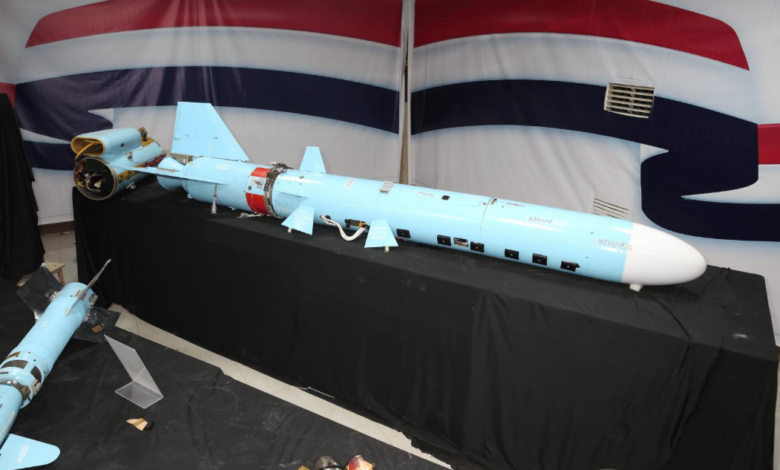
In July 2025, a CAR investigation team traveled to Yemen to document a sample of the confiscated shipment. The sample included a wide range of weapons and components not previously observed in past seizures, including:
- Anti-ship missiles: Most notably, Iranian “Ghadir” and “Sajjil” model missiles.
- Air defense missiles: Such as Chinese-made “QW-1 MANPADS” and Iranian “Qaem-118” and “Ta’er” missiles, in addition to components for the “358 SAM” missile.
- Drone (UAV) components: Including jet engines and guidance units.
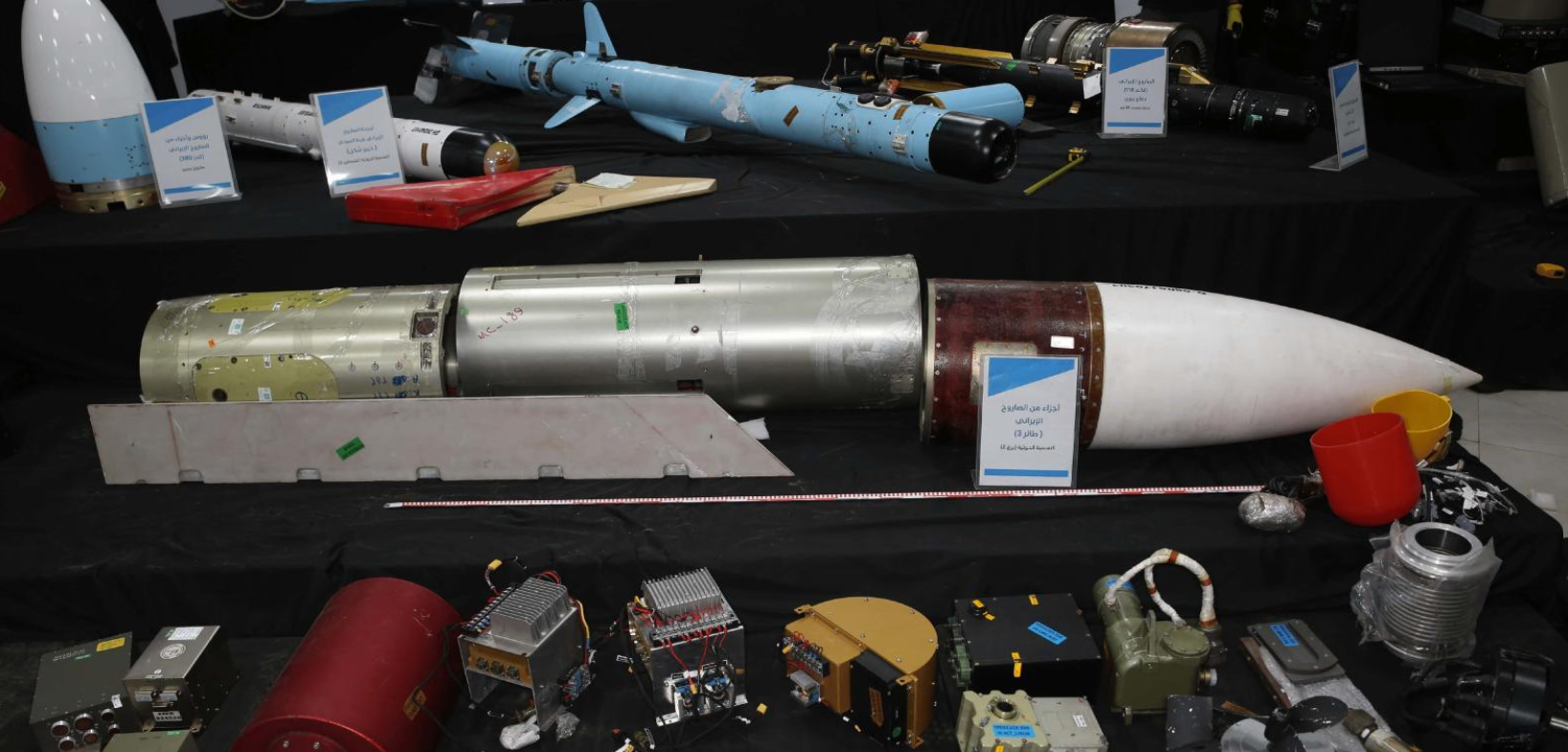
The shipment was meticulously concealed. The weapons were placed inside industrial machinery, and some were hidden in car batteries and air tanks that were cut and re-welded. The documents accompanying the shipment claimed it contained “agricultural products, agricultural equipment, and fertilizers,” with no mention of the weapons.
Despite Iran’s official denial of its involvement, the CAR investigation identified three main factors confirming the shipment’s connection to Iranian supply networks:
- Manufacturing Marks: Many of the confiscated weapons and components bear Iranian manufacturing marks, and some are linked to Iranian government institutions.
- Similarity to Previous Equipment: Some of the seized materials match Iranian equipment that was previously confiscated in earlier shipments intended for the Houthis.
- Component Match: The shipment contained components similar to those used in other Iranian weapon systems documented by the CAR organization in various regions around the world. For example, one of the air data units in the shipment was almost identical to a unit found in a “Shahed-136” drone in Ukraine.