Yemen Monitor / Newsroom:
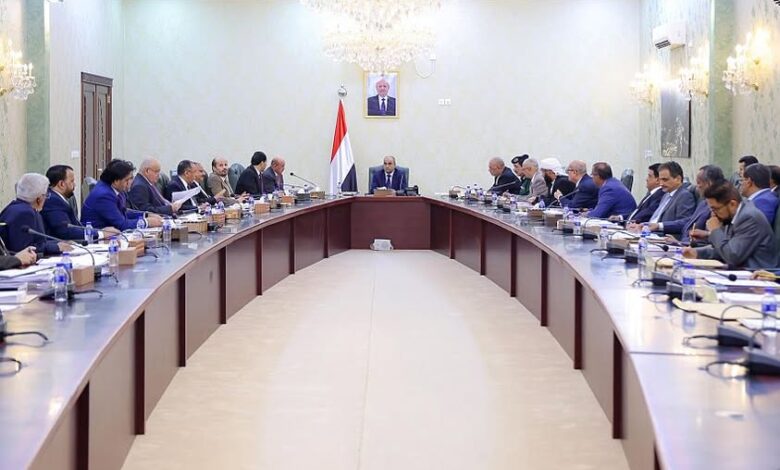
During its meeting on Wednesday in the interim capital, Aden, the Yemeni government issued a stern warning to all public institutions and revenue-generating entities, emphasizing it will not tolerate any failure to transfer funds to the Central Bank.
Prime Minister Salem bin Brik declared that any disruption in the revenue system would not be tolerated. He ordered the publication of names of entities failing to comply with the requirement to deposit funds into the government’s general account, stressing that transparency and accountability are fundamental principles of government operations. He added that misleading information would not be allowed to undermine government efforts.
The Prime Minister also underscored the importance of leveraging the recent improvement in the exchange rate of the national currency to ease citizens’ burdens, calling for stricter market oversight and immediate action against price manipulators. He instructed relevant ministries to take urgent and direct measures to address this.
Bin Brik stressed that the current phase requires strict adherence to transparency and fiscal discipline, describing the publication of non-compliant entities as a first step in correcting revenue management and restoring public trust in government performance.
He affirmed that the government is working with “exceptional effort” to confront accumulated challenges, improve institutional performance, and alleviate citizens’ suffering, emphasizing that there is no room for delay or appeasement in sensitive issues.
The Cabinet reviewed a report from the Governor of the Central Bank on monetary performance, the relocation of the banking system to Aden, and measures to regulate the currency market. The government reaffirmed its full support for reform efforts and stressed the importance of aligning fiscal and monetary policies to achieve economic stability.
The meeting also announced the formation of the High Committee for Preparing the 2026 Budget, calling it a “pivotal step” toward restoring regular public finance after years of disruption. The budget will focus on reprioritizing resources to serve the public and strengthen recovery and development pathways.
In addition, the meeting addressed the service situation in Aden and other liberated provinces, along with the ongoing protests in Hadhramaut. The Prime Minister acknowledged the public’s grievances but rejected what he described as “political exploitation of suffering,” asserting that Hadhramaut will remain a model of peace and rule of law.
“We are facing an exceptional phase, and there is no room for complacency or shirking responsibility,” the Prime Minister concluded. “Challenges must motivate greater action, not retreat. Yemen needs everyone—people and state—to restore balance and achieve genuine recovery.”
This comes as the Yemeni rial continued its recovery, with the U.S. dollar falling to around 2,400 rials by Wednesday evening, down from 2,838 rials the previous day. The Saudi riyal was reported at 650 rials.
Morning trades had seen the dollar at 2,625 rials before it gradually declined throughout the day. Sources attributed the improvement to measures by the Central Bank, including suspending non-compliant exchange companies, alongside government efforts in budgeting and revenue enhancement—moves that restored market confidence and helped slow the currency’s sharp decline.