Yemeni Health Ministry Announces Success of Emergency Polio Vaccination Campaign

Yemen Monitor / Newsroom:
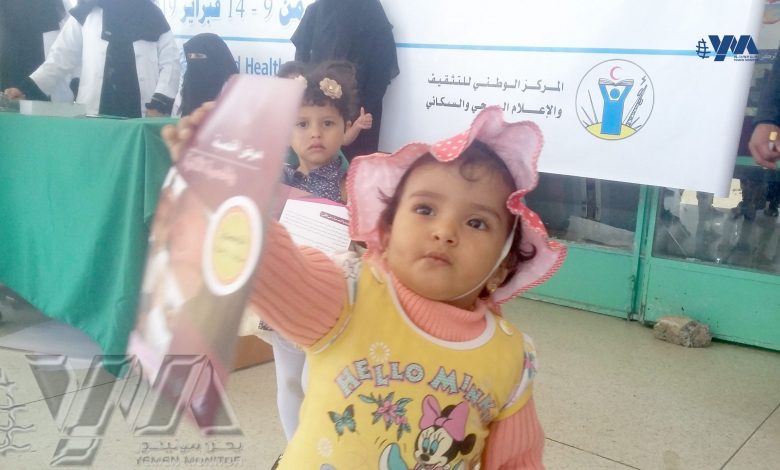
Yemen’s Ministry of Public Health and Population has announced the successful completion of the first round of its emergency polio vaccination campaign. The campaign, which targeted children under five in several governorates between July 12 and 14, was carried out in cooperation with local and international partners.
The Undersecretary for the Primary Healthcare Sector, Ali Al-Walidi, confirmed that the campaign successfully vaccinated 1,358,360 children, achieving a coverage rate of 101% of the target number. He lauded the significant efforts made by the field health and awareness teams.
The campaign covered 120 districts across 12 governorates, with the participation of 6,924 vaccination teams (6,079 mobile teams and 845 fixed teams), totaling 13,003 health workers and supervisors. These teams traversed neighborhoods, areas, and villages to reach homes and administer the vaccine free of charge.
Al-Walidi reviewed the achieved coverage rates in the targeted governorates:
- Lahj recorded the highest coverage at 109% (181,470 children).
- Hudaidah followed with 109% (45,226 children).
- Marib achieved 108% (112,710 children).
- Taiz reached 105% (352,358 children).
- Dhale achieved 103% (95,363 children).
- Aden reached 100% (145,619 children).
Governorates with lower coverage rates included Al-Mahra at 73% (16,557 children) and Socotra at only 43% (5,244 children).
Al-Walidi explained that the Central Operations Room recommended extending the campaign for an additional day in districts that did not achieve the required percentage, with intensified awareness and education activities to reach absent children or refusing guardians.
The health official noted that community education teams played a pivotal role in enhancing public response, organizing 42,953 awareness sessions that targeted over 1.1 million individuals from families and the public.
Extensive media campaigns were also conducted through 24 radio stations and 13 television channels, in addition to broadcasting awareness videos on social media platforms and using loudspeakers and mobile vehicles. The role of mosque imams in delivering health messages to citizens was also highlighted.
Al-Walidi concluded by emphasizing the continued efforts of the ministry and its partners in combating epidemic diseases and enhancing comprehensive health coverage for children in various governorates.