Yemen Monitor/Reuters:
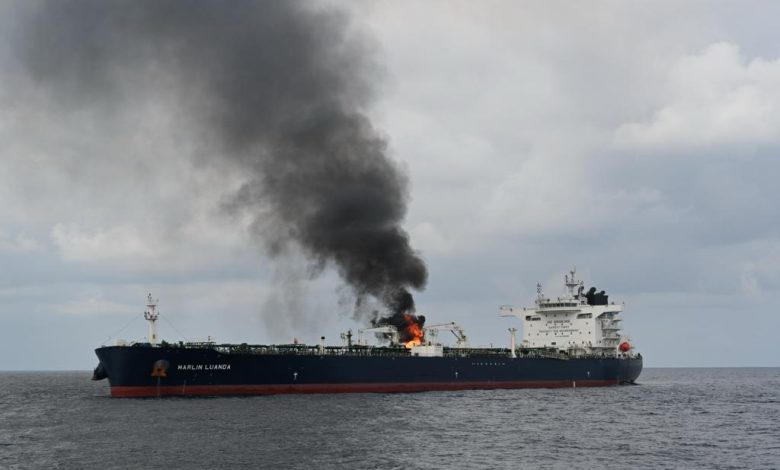
International maritime authorities have issued warnings to commercial shipping vessels to exercise caution and avoid transiting through the Strait of Hormuz and the Red Sea, following extensive Israeli attacks targeting facilities inside Iran on Friday morning. These warnings come amidst concerns of a widening military escalation in the region.
The multinational Combined Maritime Forces (CMF), led by the US, affirmed that navigation continues in the Strait of Hormuz despite recent security developments. However, in an advisory statement, the CMF indicated that there is a “significant likelihood of regional conflict,” as commercial ship owners become increasingly wary of transiting tension-prone areas.
Iran had previously threatened to close the Strait of Hormuz in response to Western pressure. The strait is a vital artery for transporting about a fifth of the world’s oil supplies. Analysts believe any move to close it could cause widespread disruption to trade and energy markets.
While maritime traffic has continued in the strait, Reuters-reviewed documents revealed that Britain and Greece issued warnings to their flagged vessels, urging them to avoid sailing through the Gulf of Aden and the southern Red Sea, and to register all voyages transiting the Strait of Hormuz with the relevant authorities.
A circular issued by the Greek Ministry of Shipping stated that registered ship-owning companies must send full details of voyages passing through the Strait of Hormuz “due to escalating military activities in the wider region.”
In the same context, the British Department for Transport recommended that British-flagged vessels, including those registered in Gibraltar and Bermuda, avoid the Gulf of Aden and the Red Sea. It stressed the need for maximum caution and a reduction in the number of crew members on deck during transit.
For his part, Jakob Larsen, Head of Maritime Safety & Security at BIMCO, stated that reports confirm an increasing number of ship owners are “avoiding risk areas such as the Red Sea and the Gulf.” He added, “If the U.S. involvement in the attack is confirmed, the risk of escalation will double, including the possibility of missile attacks on vessels or the laying of naval mines in the Strait of Hormuz.”
Amid this escalation, the EU Red Sea mission (ASPIDES) confirmed that it continues its usual operations but is closely monitoring the situation.
This comes as Israel announced that its strikes targeted nuclear facilities, ballistic missile production sites, and a number of military commanders in Iran, as part of what it described as a “long-term operation to prevent Tehran from developing a nuclear weapon,” which Iran categorically denies.
A state of anticipation prevails in international maritime and diplomatic circles, amidst fears that the current escalation could lead to a temporary paralysis of global trade through the world’s most sensitive waterways.