The other dimensions to the Houthi-US deal
By/ Maysaa Shuja Al-Deen

Yemen Monitor/Agencies:
As the dust from the surprise accord between Ansarullah and the US settles, new dimensions to the May 6 agreement are emerging. Also known as the Houthis, the Yemeni group’s halting of maritime attacks in the Red Sea in return for an end to US airstrikes has repercussions for the region and within Yemen.
Speaking on condition of anonymity, multiple Yemeni sources with knowledge of the mediation effort by Oman said there was pressure for the agreement to cover additional components: the freeing of UN employees, ending attacks on Israel and finalizing a peace deal between Ansarullah and Saudi Arabia. The former objective has been achieved, Amwaj.media has learned, while the latter two aims remain distant prospects.
Ultimately, beneath the surface of the seemingly promising agreement lie significant complexities. The very factors that enabled the deal could also contribute to its fragility or eventual collapse.
Promising deal, but dangers persist
Beyond the maritime attacks which have rerouted commercial shipping away from the Red Sea, there has been rising alarm over Houthi detentions of dozens of local employees of international NGOs, western embassies and the UN. Although some targeted individuals have been freed in past months, many remain in custody.
The Houthis have framed the detainees as part of a larger espionage network allegedly working for western governments, with its media affiliates airing a series of seemingly forced confessions. The arrests reveal the deep-rooted conspiracy mindset within the Houthi security apparatus, which views almost any foreign contact with suspicion.
Preferring that his name be withheld given the sensitivity of the topic, an informed Yemeni source charged to Amwaj.media that the Houthis have as part of the Omani mediation quietly agreed to release detained NGO and UN workers. According to the source, the detainees will be freed, but on an individual basis to avoid public scrutiny.
While facilitating movement on the detainees, the Houthi-US agreement strategically sidestepped two highly complex issues: the ongoing Yemeni attacks on Israel and the roadmap for peace with Saudi Arabia. The former was notably excluded, which has led to disappointment in Tel Aviv. The latter, which was almost finalized in 2023, is said to have been derailed by US opposition last year as the Houthis initiated attacks in the Red Sea to compel a ceasefire in Gaza.
The non-revival of the roadmap for peace may have been influenced by the alleged Saudi support for the US bombing campaign in Yemen. Reports have emerged of the sharing of targeting data, with the Kingdom supposedly outlining a dozen Houthi high-level targets believed to be essential to the group’s operations.
Ultimately, one reason for the success of the Houthi-US deal is its simplicity. It did not attempt to resolve every issue, which would have meant involving too many actors. However, this narrow focus could also create spoilers. For example, Israel, being sidelined, may attempt to sabotage the deal in the future.
Mutual claims of victory
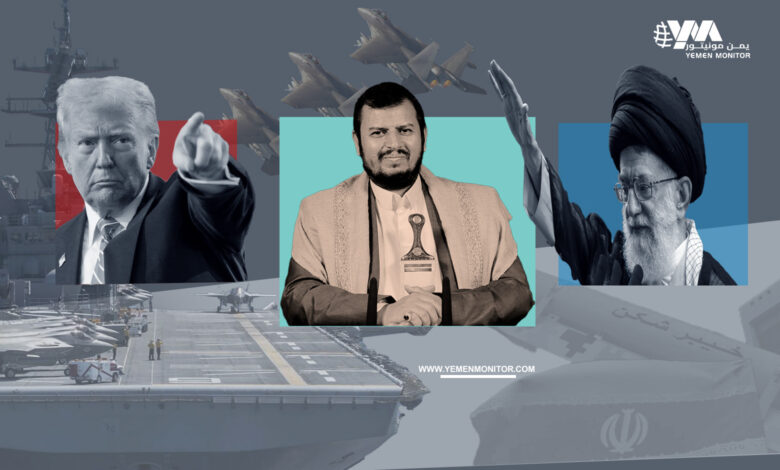
One of the relatively harmless yet effective aspects of the Omani mediation was that it allowed both sides to declare victory. When he announced the deal, Trump charged that the Houthis had “begged” him for an agreement that he characterized as “capitulation.”
In direct response, top Ansarullah leader Abdul-Malik Al-Houthi stated on May 8, “The American position was not, as the criminal infidel [Trump] claimed, based on pleading and surrender from Yemen. That is an impossibility.”
For Trump, it is politically advantageous to claim success where his predecessor Joe Biden had failed in stopping attacks on commercial shipping. He also ended a costly US bombing campaign—first initiated last year—that was unlikely to produce a decisive military outcome. Notably, the timing was particularly strategic, as it came just before Trump’s tour of wealthy Gulf Arab states, which is focused on securing massive economic agreements.
To the Houthis, simply engaging with the world’s most powerful nation is a victory, regardless of the consequences. It has also given the group breathing room to rebuild and reorganize after intensive airstrikes targeted critical military infrastructure.
Oman in the spotlight
Oman has hosted Houthi negotiators since the Saudi-led military intervention in Yemen back in 2015, solidifying its position as the most effective mediation channel. However, the Sultanate’s role has long been a subject of controversy and criticism, especially from anti-Houthi factions.
Reports have alleged Omani involvement in weapons smuggling, while Yemeni figures seen as close to Muscat, such as Shaykh Ali Al-Huraizi from the border governorate of Al-Mahrah, often maintain good relations with the Houthis. Of further note, Oman is the only Gulf Cooperation Council (GCC) member state that has not officially received the leadership of the Presidential Leadership Council (PLC), Yemen’s internationally-recognized governing body.
As a result, Oman has faced accusations that it is more of an ally of the Houthis than a neutral mediator. These concerns deepened with the election of Trump, who enjoys a close relationship with the United Arab Emirate (UAE), Oman’s primary rival. Lacking the economic power to match the investment opportunities offered by wealthier GCC states, Oman has sought to leverage what it can: its diplomatic skills—with the support of Iran in the case of the Houthi-US deal.
But the agreement presents long-term risks for both Oman and Iran. The two countries have long maintained close ties with the Houthis while maintaining plausible deniability about their influence. By demonstrating their ability to extract concessions from Ansarullah, they have weakened that argument. Expectations will now be higher, and pressure may increase on both Muscat and Tehran to deliver future compromises on other issues. In essence, the era of offering support to the Houthis without bearing responsibility may be coming to an end.
Yemeni perceptions of the deal
The Houthi-US agreement was notably announced shortly after Israel flattened Sana’a International Airport and bombed key civilian infrastructure such as factories, power stations and the port of Hodeidah.
Initially, the Houthi drone and missile strikes on Israel—launched in ostensible support of the Palestinians—bolstered their popularity and reinforced their image as heroic resistance fighters. Indeed, even some of Ansarullah’s domestic opponents admired the group’s stance on the Palestinian cause. However, the confrontation with Israel has gradually become deeply controversial within Yemen.
Many Yemenis have begun questioning the rationale behind their country’s involvement in the Gaza war, asking why a fragile and impoverished nation should face major military powers. The Israeli-US airstrikes reignited familiar criticisms of the Houthis, portraying them as reckless and warmongering, more inclined to pursue conflict than face the hard responsibilities of governance and peace. Moreover, the group’s attacks on Israel have not inflicted enough damage to influence Tel Aviv’s military strategy in Gaza, further deepening public frustration over the price Yemen is paying for largely symbolic gestures.
Against this backdrop, the Houthi-US agreement has one significant and direct domestic impact in Yemen: the effective end to the internationally-recognized government’s aspirations to secure foreign support for a ground operation to recapture Yemen’s western coast, and potentially even Sana’a. This may in turn shift power dynamics as Ansarullah and Saudi Arabia eventually go back to the negotiating table. What weighs most heavily on the Yemeni public is the absence of any tangible path toward resolving the broader conflict in Yemen or improving dire living conditions, now exacerbated by continued Israeli strikes.
Ultimately, the very simplicity that made the Houthi-US deal possible may also contribute to its unraveling. While the agreement is promising and could serve as a foundation for further progress, its potential will be lost if it continues to ignore the Houthi involvement in the Gaza war and the underlying causes of Yemen’s internal conflict. These unresolved issues risk creating spoilers and reigniting hostilities, paving the way for another phase of the war in Yemen.
Source: Amwaj Media