Yemen Monitor / Newsroom:
The so-called executive body of the Southern Transitional Council (STC) in Shabwa Governorate said it rejects the investigative committee formed by the governor, Awad bin Al-Wazir Al-Awlaki, to examine the events of February 11 in front of the local administration building in Ataq.
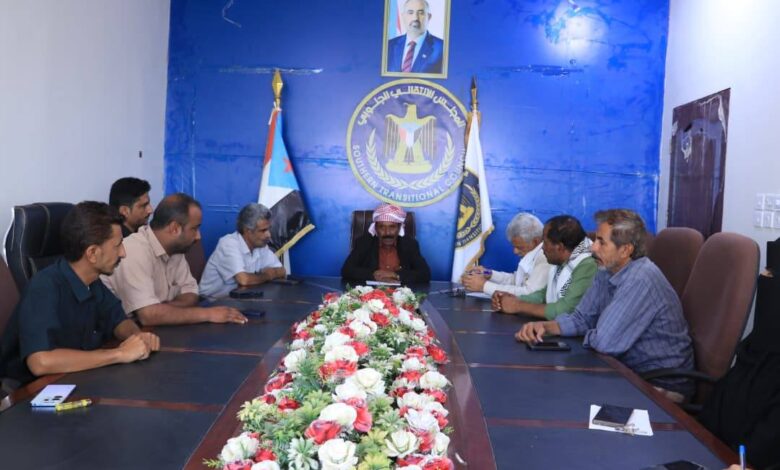
Media outlets affiliated with the dissolved STC reported that an extraordinary meeting chaired by Sheikh Lahmar Ali Lsoud, attended by heads of local bodies, called for the formation of an independent and impartial investigation committee to ensure justice. They described the committee formed by “Bin Al-Wazir” as merely a “governorate office committee.”
The statement accused security and military leaders who are members of the official committee of being involved in the Ataq events and demanded that they be referred to the judiciary.
Photos circulated from the meeting show Lahmar bin Lsoud seated with a portrait of Aidarus al-Zubaidi and the STC emblem behind him during an official gathering—contradicting the governor’s earlier announcement that the STC headquarters had been closed.
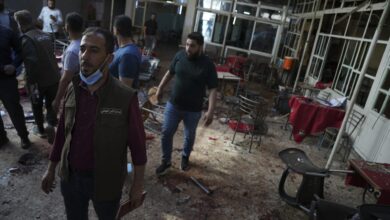
On Wednesday, February 11, at least 29 people were killed or injured after pro-STC protesters attempted to storm the Shabwa governorate headquarters, triggering clashes that left casualties, including members of the guard force.
Shabwa governor announced the formation of an investigative committee into the incident, headed by Deputy Governor Ahmed Saleh Al-Dagari and including security leaders, with the participation of three representatives of the victims’ families.
Despite STC leaders in Riyadh announcing on January 9 the dissolution of the council and its political, military, and security structures, figures aligned with Aidarus al-Zubaidi continue to hold public events and meetings in full view of security forces and local authorities, which have declared their support for the Presidential Leadership Council.
Shabwa is considered one of the southern governorates that has witnessed the bloodiest incidents due to the STC’s insistence on protests. The provincial security committee had previously banned demonstrations without prior authorization, leading to confrontations and casualties.