Yemen Monitor / Special Coverage:
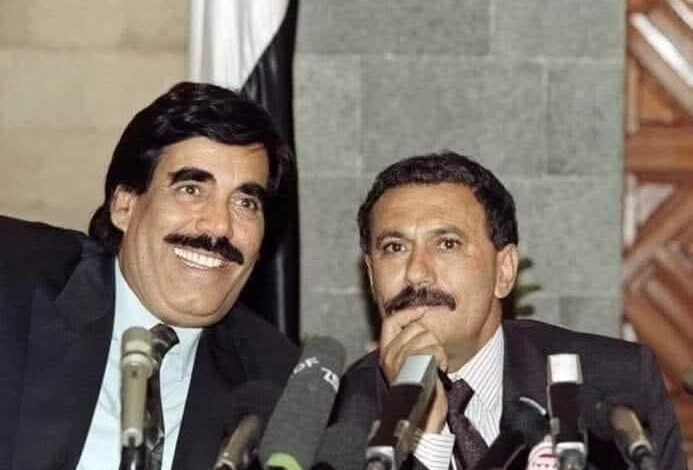
The passing of Ali Salem Al-Beidh—the former Secretary-General of the Yemeni Socialist Party, former Vice President of Yemen, and the last President of the People’s Democratic Republic of Yemen—has sparked a wide wave of political and popular reactions, reflecting the magnitude of his presence in the national memory. He is regarded as one of the foremost architects of pivotal moments in modern Yemeni history, foremost among them the achievement of Yemeni unity in 1990, with all that it carried of hopes, conflicts, and transformations.
On Saturday, the Yemeni Presidency mourned the great national struggler Ali Salem Al-Beidh, affirming that with his passing the nation has lost one of the most prominent leaders and political symbols in its contemporary history, and a sincere partner in achieving the accomplishment of Yemeni unity on 22 May 1990—at that time embodying Yemenis’ aspirations for a single state based on national partnership and the rule of law.
The Presidency also announced official mourning and the lowering of flags to half-mast for three days, as well as the opening of condolence registers at home and abroad, in recognition of the deceased’s stature and national role.
Regarding reactions, former minister Khaled Al-Rowaishan wrote a tribute to Al-Beidh, describing him as “pure-hearted,” and stressing that announcing unity from Aden on 22 May 1990 is sufficient to grant him “pride and immortality.” He considered that moment to represent “the half-full cup” of Al-Beidh’s life—indeed, “half multiplied by a thousand cups”—praising his sincerity in joy, anger, and silence alike, until his passing.
For his part, Abdulmalik Al-Mekhlafi, Deputy Head of the Consultation Authority and a Nasserist leader, described Al-Beidh as “one of the great men in Yemeni history, and the true hero of unity and democracy.” He reviewed his long relationship with him, his pivotal role in achieving unity, and the great suffering he endured afterward, calling for historical fairness toward the man and for not reducing his entire career to the moment he declared secession in 1994—despite considering that declaration a “grave mistake.”
Meanwhile, Member of Parliament Ali Hussein Ashal wrote that Al-Beidh’s passing “turns a page from one of the most brilliant and complex chapters of modern Yemeni history,” affirming that the late leader was at the heart of events, not on their margins. He noted that his name will remain present as one of those who shaped major transformations in the course of the Yemeni state, pointing to his clarity, courage, frankness, and freedom from political rancor.
Yemeni Ambassador to Turkey, Mohammed Saleh Turiq remarked that al-Beidh was “one of the prominent names in Yemen’s political journey” and a key partner in achieving unity, a milestone inseparable from the narrative of contemporary Yemen.
Writer Mu’een Dammaj, for his part, considered that the passing of Ali Salem Al-Beidh closes a significant chapter in Yemen’s history, describing him as one of the most present and influential figures, and noting that his career represents “a parable of Yemen itself,” oscillating between great dreams and harsh setbacks.
Ali Salem Al-Beidh is regarded as one of the most prominent political figures in modern Yemeni history. His name is closely associated with the achievement of Yemeni unity in 1990, before he went on to lead the declaration of secession in 1994 and the subsequent war and sharp turns in the country’s trajectory. Despite the controversy surrounding him, his name remains firmly embedded in Yemeni memory as one of the makers of history and its decisive moments.