Yemen Monitor / Newsroom:
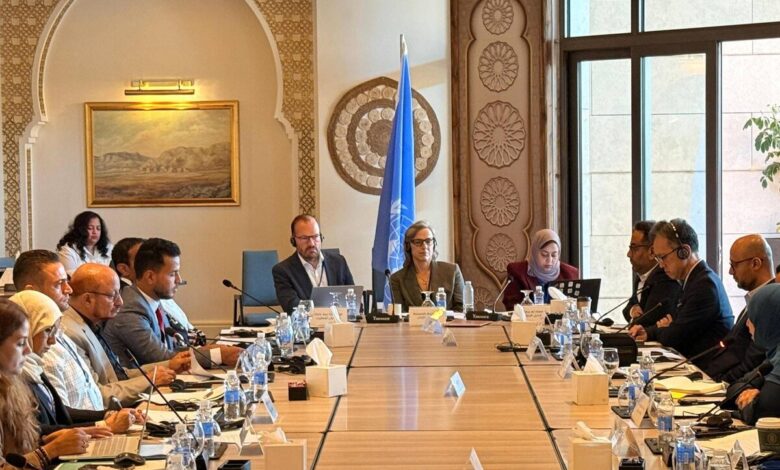
The Office of the UN Special Envoy for Yemen held technical discussions in the Jordanian capital, Amman, on September 28–29, 2025. The meetings brought together Yemeni and international experts in economics, institutional reform, justice, human rights, and civil society.
The sessions focused on exploring mechanisms to address economic governance and improve basic services amid the worsening economic situation caused by more than a decade of conflict.
Participants stressed the need to move forward with urgent economic reforms even in the absence of a comprehensive political settlement, emphasizing justice and fairness toward those affected by the conflict. They underscored the importance of strengthening institutions to ensure transparency and sustainability of these reforms, thereby restoring citizens’ trust and improving daily living conditions.
Experts highlighted the devastating impact of the conflict on Yemen’s economy, including a sharp decline in per capita GDP, collapse of basic services, corruption, weak social safety nets, and the politicization of the economy as a weapon of war—factors that have worsened the suffering of public sector employees, displaced families, and low-income groups.
They also noted that human rights violations with long-term economic repercussions have further deepened the crises.
Participants emphasized that concepts of justice, fairness, and reparations must be reflected in tangible improvements in people’s lives—through income stability, access to essential services, property restitution, real job opportunities, and social reintegration.
They called for grounding the discussions in the real experiences of citizens rather than solely in diplomatic positions.
Regarding reparations, experts stated that financial compensation alone is insufficient, urging the adoption of a comprehensive approach that includes property restitution, psychological and social support, guarantees of non-repetition, and community-based initiatives that promote reconciliation and sustainable peace. Some of the proposed short-term measures include documenting damages, enhancing transparency, providing psychosocial support to victims, restoring public services such as health, education, and housing, and developing unified administrative tools to support future reparation programs.
Participants stressed the importance of embedding these measures within a clear legal framework to prevent misuse and ensure rights, while maintaining consistency in the application of various redress mechanisms.
They noted that linking economic issues with transitional justice could serve as a practical step toward building trust and addressing urgent grievances, thereby laying the groundwork for broader reconciliation efforts even before a comprehensive political settlement is reached.
The Office of the UN Special Envoy for Yemen expressed gratitude to the Hashemite Kingdom of Jordan for its continued support in hosting these vital discussions, which represent an important step in advancing a Yemeni-led and Yemeni-owned political process, according to the UN News Agency.