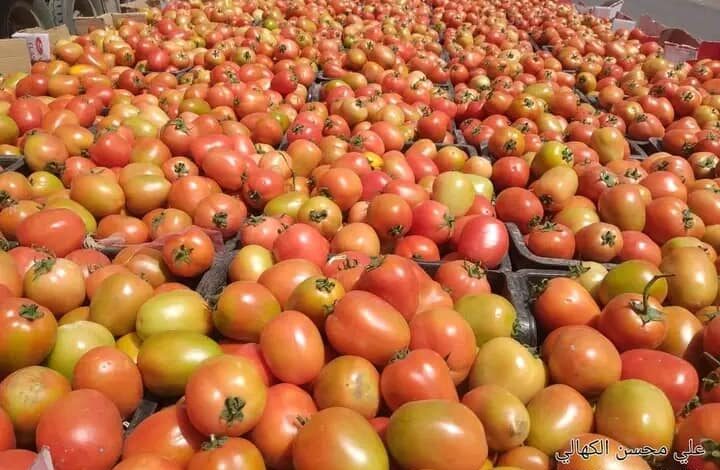
Yemen Monitor / Reports Unit / Exclusive:
A video clip of a Yemeni farmer dumping his tomato harvest onto the ground in protest against an unfair government price has ignited a wide wave of interaction and anger on social media. This incident has raised pressing questions about the future of agriculture in Yemen and the state’s role in saving farmers from heavy losses.
The video, published by the “Monitor” platform on X, showed the Yemeni farmer emptying baskets full of tomatoes into the dirt, expressing his despair over a price of only 500 riyals per basket. This price, he stated, does not even cover a small fraction of the cultivation and transportation costs, let alone other losses.
Within just 48 hours, the video surpassed 1.5 million views, reflecting the extent of public sympathy and the escalating anger evoked by this scene.
مزارع يمني يرمي محصوله من الطماطم في الأرض تعبيراً عن غضبه بسبب فرض تسعيرة 500 على قيمة السلة الواحدة، والتي على حد تعبيره لا تعادل تكاليف خسارته pic.twitter.com/jp15EjbXVW
— يمن مونيتور (@YeMonitor) July 23, 2025
Angry and Divided Reactions
The painful clip divided opinions between those who understood and supported the farmer’s anger, and those who criticized the destruction of the crop instead of donating it. Yemeni activist Jalal Nasser Mohammed commented, saying: “If there were an effective government, it would have put in place radical solutions instead of leaving farmers to their fate. Solutions include paying price differences, opening external sales outlets, and encouraging the private sector to establish tomato paste factories.”
He added, warning of the crisis’s consequences: “Next season, prices will skyrocket, because many farmers will stop growing tomatoes after these losses.”
On the other hand, Gulf tweeter Abdulaziz Al-Hashem criticized the farmer’s action, writing: “Where is the wisdom? If you had donated this crop to the poor and orphans in Yemen, it would have been better and more lasting. Anger can push a person to painful decisions that only result in loss.”
Others believed that the farmer’s act was more a cry of despair than a rational decision. One wrote: “Dumping the harvest instead of distributing or donating it is proof of the extent of despair and oppression. This farmer reached a point of injustice that made him lose the ability to think of logical options. It is a cry for help against the injustice of the Houthi group and the corruption of the agricultural reality.”
Another farmer named Atef shared his bitter experience, saying: “This month I lost $6,000 due to a cold snap that hit my crops. I did not despair, nor did I throw away the harvest; rather, I accepted what God had decreed. This act has a kind of transgression against God’s blessing.”
In the same context, tweeter Dakheel Al-Nasser wrote: “His real loss is not in money, but in recklessness and bad intentions. If he had donated this crop, it would have been better for him in this world and the hereafter.”
Agricultural expert Abdulrahman Bathafeiri blamed the authorities for the failure, saying: “The absence of management and planning in the agricultural sector is the cause of these disasters. There is no plan to regulate supply and demand, nor coordination for internal distribution of production or its export.”
Meanwhile, activist Youssef Akhdar suggested simple solutions that were within the farmer’s reach, explaining: “He could have dried the crop, or converted it into tomato paste, or distributed it to displaced persons and those in need. There are about 5 million displaced people in Yemen who need every fruit.”
Escalating Crisis: Agriculture at the Mercy of the Wind
Official reports indicate that tomato cultivation covers an area estimated at 13,688 hectares in Yemen, and it is considered one of the most prominent crops resorted to by citizens after the outbreak of the war, especially due to the lack of income sources and the interruption of salaries.
However, despite this increasing reliance on agriculture, a series of obstacles stand before farmers. Foremost among them are the closure of roads by the Houthi group, the absence of central cold storage facilities for preserving crops, and the significant increase in transportation costs.
Ironically, the price of a kilo of tomatoes in Yemeni markets does not drop throughout the year; it has even reached about 2,500 riyals in recent months, while farmers are sometimes forced to sell their produce at a paltry price not exceeding 500 riyals for a full basket.
According to agricultural statistics, Yemen’s average tomato production is about 133,000 tons annually. Production in 2022 reached about 172,830 tons, compared to 126,000 tons in 2020, indicating growth in production that has not been accompanied by any government regulation or support.
Between Pricing and Despair
The case of the angry farmer is merely a mirror reflecting the depth of the agricultural crisis in Yemen. It is not just a crisis of tomatoes or pricing, but the story of an entire sector left exposed, without protection or planning, leaving the farmer either losing, angry, or desperate.
While calls continue for adopting strategic solutions to save Yemeni agriculture from collapse, the state and its institutions remain absent from the scene. The Yemeni farmer, meanwhile, pays the price for war, administrative failure, and political stagnation—a basket of tomatoes equals a scream, but it exposes an entire nation.