Edited by / Yemen Monitor
Until the Houthis recognize the costs of their aggression, the Yemeni Houthi group will continue to threaten stability in the Red Sea, according to The National Interest .
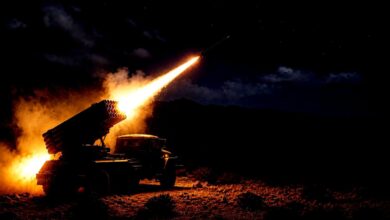
While Iran and Hezbollah lick their wounds after costly clashes with Israel, one of Tehran’s most dangerous proxies continues to launch missiles at the Jewish state. On July 22, the Yemeni Houthis fired a ballistic missile at Ben Gurion Airport, just four days after launching another. These are not isolated provocations. They are a clear signal: the Houthis have not been deterred.
Washington’s response has followed a familiar pattern so far – a pattern that has repeatedly failed. Like Saudi Arabia before it, the U.S. has pursued a diplomatic path, offering ceasefires and incentives in the hope that the Houthis would desist. However, history tells us otherwise: the Houthis treat every pause as an opportunity to rearm, regroup, and return to the battlefield stronger.
Instead of appeasement, the US must adopt a sustained campaign of sanctions, diplomatic pressure, and, when necessary, military force. Anything less is an invitation to further bloodshed.
This is not just Israel’s problem. The Houthis have launched dozens of attacks on civilian shipping in the Red Sea, causing chaos in global supply chains and threatening one of the world’s most vital maritime chokepoints. These attacks challenge the U.S.s’ commitment to defending freedom of navigation – a cornerstone of global prosperity since the end of World War II.
In May, Washington helped broker a ceasefire via Oman. The objective was straightforward: end attacks on international shipping. But within weeks, the Houthis shattered the agreement. On July 7 and 9, they attacked two cargo ships, killing three sailors and reportedly taking six others hostage.
Lessons from Saudi Arabia’s Engagement
Saudi Arabia once believed it could negotiate with the Houthis. After entering the Yemeni civil war in 2015 to defend the internationally recognized government, Riyadh found itself caught in a suffocating quagmire. The conflict evolved into one of the world’s worst humanitarian disasters, and reactions were swift.
By 2020, American public opinion of Saudi Arabia reached historic lows. As a candidate, Joe Biden promised to make the Saudi government a “pariah.” As president, he curtailed arms sales and revoked the Trump administration’s designation of the Houthis as a foreign terrorist organization.
However, while Biden softened U.S. policy toward the Houthis, the Houthis did not reciprocate.
As Ambassador Michael Ratney, former U.S. envoy to Saudi Arabia, noted on the Foundation for Defense of Democracies’ “Iran Breakdown” podcast, Houthi attacks on Saudi cities, airports, and energy infrastructure not only inflicted present damage – they jeopardized Saudi Arabia’s long-term development plans.
In 2022, Riyadh reached a six-month ceasefire agreement with the Houthis and, notably, refrained from retaliating even after the Houthis launched drone attacks on critical Saudi infrastructure. Saudi Arabia’s new regional doctrine is clear: de-escalate, do not escalate.
But this doctrine only works if the adversary shares that goal. The Houthis do not. They have disrupted peace negotiations, imposed an oil embargo on Yemen, and continued to smuggle advanced weaponry – including missile components – from Iran.
Post-October 7th Aggression
Worse, the Houthis expanded their aggression after October 7, 2023. They launched missiles at Israel, hijacked the Galaxy Leader vessel and its 25-person crew, and conducted over 100 attacks on commercial shipping. Between October 2023 and January 2025, they fired hundreds of projectiles at Israel – all while enjoying their truce with Saudi Arabia and deepening their capabilities.
To its credit, the U.S. responded in March 2025 with Operation Rough Rider, a military campaign that targeted over 1,000 objectives, eliminated key Houthi leaders, and degraded the group’s operational strength. But by early May, Washington was once again seeking a ceasefire. President Donald Trump announced he would “take the Houthis at their word” that they would stop attacking ships.
Two months later, that word is worthless. The Houthis have returned to killing civilians and taking hostages.
This is the true cost of “de-escalation at all costs.” It sends a message that violence brings rewards – and that violating a ceasefire with the world’s most powerful military has no real consequences. The Houthis know that as long as they offer vague assurances, the US will hesitate to act decisively.
We have seen this scenario before – with Iran itself. For years, Tehran strung along the international community with endless nuclear negotiations while advancing its weapons program. Then, in a stunning pivot, Trump backed Israeli airstrikes on Iranian nuclear infrastructure and ordered US bombers to destroy three key targets when Tehran missed his deadline for a deal.
This kind of credibility matters. But credibility requires readiness. The US must be prepared to act when diplomacy fails. It must not let the Houthis or Iran do so.
Until the Houthis believe there is a real price for their aggression – a price in sanctions, in military costs, and in diplomatic isolation – they will continue their path of war. Ceasefires must be earned, not granted. And agreements with terrorists are not agreements at all.
Source: The National Interest, written by Mark Dubowitz and Coby Gottlieb