Yemeni Government Discusses Activating Mechanisms to Accelerate Adjudication of State Cases in Taiz

Yemen Monitor / Newsroom:
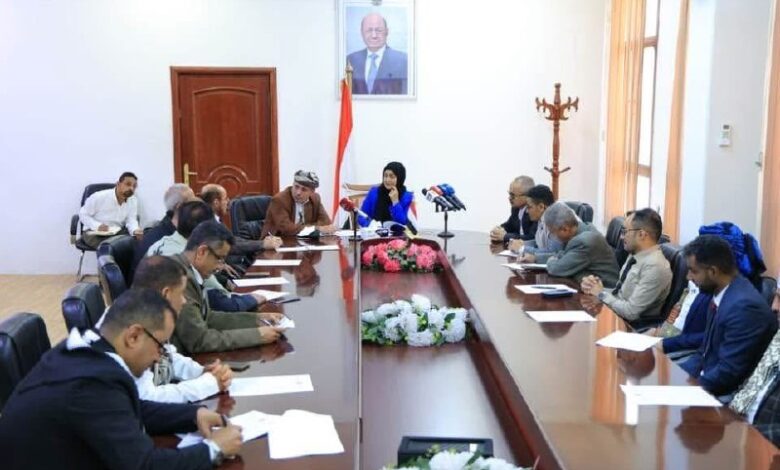
The Minister of Legal Affairs, Ishraq al-Maqtari, discussed on Tuesday with the local authority and the heads of the Court of Appeal and the Appellate Prosecution a range of challenges and obstacles facing courts and prosecutions in considering State cases in Taiz Governorate (southwestern Yemen).
The meeting addressed cases related to public funds, administrative and criminal cases, in addition to complications regarding the representation of the State before the judiciary and mechanisms to accelerate the adjudication of cases.
The meeting—which included the First Undersecretary of the Governorate, Dr. Abdulqawi al-Makhlafi, the Chairman of the Governorate’s Court of Appeal, Judge Razaz al-Sha’abi, and the Head of the Appellate Prosecution, Judge Muhammad Sultan—also touched upon the importance of activating the government arbitration mechanism for disputes between government entities. This contributes to reducing the burden on courts and resolving disputes in a legal and organized manner.
The Chairman of the Court of Appeal and the Head of Prosecution reviewed the most prominent practical difficulties, presenting a number of proposals to develop judicial performance and improve mechanisms for dealing with State cases.
The Minister of Legal Affairs emphasized the importance of enhancing coordination and integration between the Ministry and the judiciary to address issues related to State cases, protect public funds, and ensure the integrity of legal procedures. She stressed that legal representation of the State is restricted to an official authorization issued by the Ministry, thereby strengthening the control of legal procedures and safeguarding the rights of the State.
The meeting concluded by affirming the importance of continued joint coordination and incorporating the observations into the legal and administrative reform matrix to enhance the efficiency of the judicial system and protect the rights of the State and society.