Yemen Monitor / Sana’a / Exclusive:
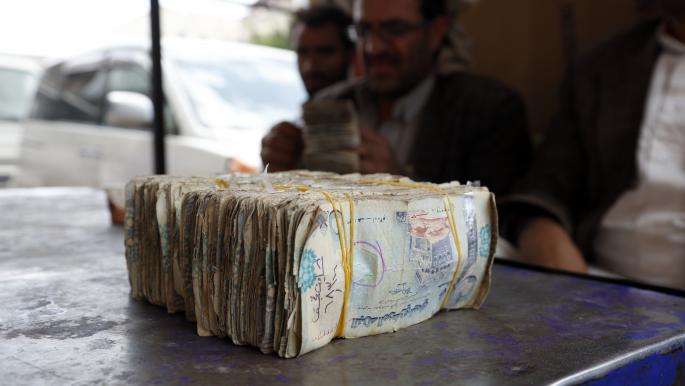
Citizens and customers in areas under the control of the Houthi movement have complained that exchange shops and money transfer companies are flooded with worn-out and damaged Yemeni banknotes that are no longer suitable for circulation. With Eid al-Fitr approaching, this has caused significant hardship for people trying to receive money transfers or handle everyday payments.
Several citizens said that exchange companies operating under Houthi control refuse to hand over transfers in good- condition currency and instead force customers to accept torn and damaged banknotes, particularly the 500-rial note, most of which has become heavily worn and is often rejected by markets and shops.
One customer said:
“All exchange shops are following this method, in agreement with the central bank under Houthi control in Sana’a. Large quantities of worn-out money are pumped into circulation before holidays, turning citizens into victims of this financial hardship.”
Another citizen, Osama Qaed, said:
“I have a money transfer worth 150,000 Yemeni rials (about $300), but the money changers refused to give it to me in good-condition currency. They forced me either to accept the worn-out notes or to buy foreign currency at high prices, which generates illegal profit for the money exchange shops in cooperation with the central bank in Sana’a.”
He added that damaged currency makes it nearly impossible to pay rent or buy basic necessities, since most landlords, shop owners, schools, and grocery stores refuse to accept it.
Another citizen, Safiya Ali Qaed, confirmed that some money changers exploit citizens’ transfers in foreign currencies, turning the situation into a form of financial extortion. According to her, large and clean banknotes are reserved for certain clients, while others are forced to accept their transfers in torn and worn currency.
She also said that many exchange shops deliberately mix damaged and unusable banknotes into bundles of cash, refuse to replace them, and decline to accept them back from citizens, further increasing people’s suffering as Eid al-Fitr approaches.
Economic experts say these practices—carried out by exchange companies in cooperation with the central bank in Sana’a under Houthi control—generate additional wealth for the armed group while forcing citizens to bear the burden of dealing with damaged currency. Meanwhile, foreign currency is effectively transferred from citizens’ pockets into accounts linked to the group, worsening the population’s economic hardship without oversight or accountability.